
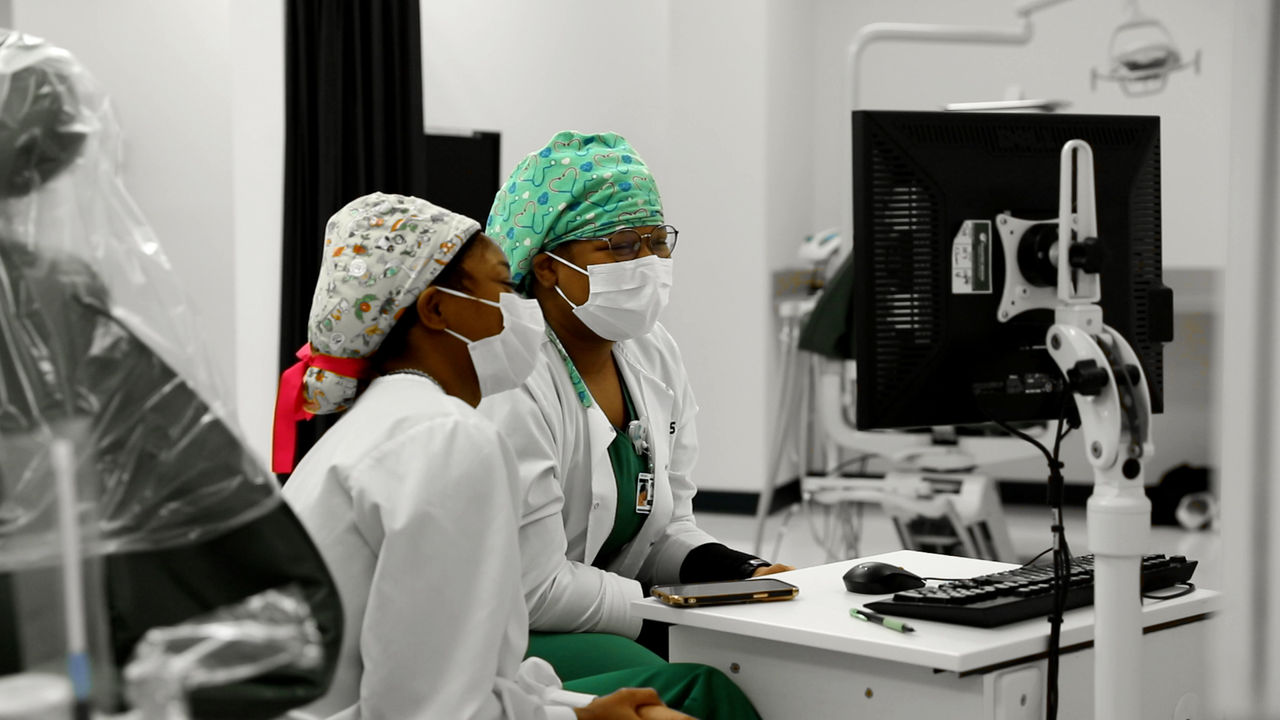
Artificial intelligence (AI) is being used in dentistry to help dental teams work more efficiently and improve the care they provide to their patients. It can assist with tasks that range from reminding staff about overdue screenings to making diagnoses and recommending early treatments.
In general, dental professionals have a favorable view of the role of AI in dentistry. A 2023 Dentaly survey of licensed dentists found that 81% see it as a positive. The survey also found that 35% of dentists are already using it, and 77% of those who had used it had seen good results.
This data highlights how AI is becoming widespread across dental fields, including in orthodontics, periodontics, oral surgery, and pediatric dentistry. AI use by dental assistants is also growing. In a 2025 survey conducted by the Dental Assisting National Board (DANB), 1 in 3 dental assistants said their practices used AI tools in some way.
Individuals considering pursuing a career in dental assisting should understand how AI tools are being used in dentistry. Completing a dental training program can prepare prospective dental assistants with the skills they need to enter a promising field that is projected to see 6% job growth between 2024 and 2034, according to the U.S. Bureau of Labor Statistics (BLS).
Examples of AI in Dentistry
The use of AI in dentistry continues to expand into many different areas of dental practice. For example, it is now being used to interpret dental images such as radiographic or optical images. It is also being implemented in treatment planning, documentation, and practice management processes. Here is a brief breakdown of current AI use in dentistry.
Imaging and Diagnosis
AI-powered software can be employed to analyze dental radiographs and intraoral scans — magnified, real-time video or images of the teeth and gums — to aid dentists in diagnosing problems and in educating patients about their oral health and diagnoses. These tools can help dentists detect cavities, oral diseases, and other conditions more quickly and accurately.
Treatment Planning and Risk Prediction
In orthodontics and implantology, AI tools can help dental offices develop more efficient workflows and simulate patients’ treatment outcomes to assist dentists in gaining the consent of the patients for the treatment. Predictive algorithms also are able to estimate patients’ risk for conditions such as periodontal disease or oral cancer, which can enable dentists to pursue earlier, more proactive interventions and treatments.
Charting and Documentation
AI dentistry tools for charting and documentation can help improve the way dental practices operate. The daily responsibilities of dental assistants often involve handling a significant volume of paperwork, including patient charts, treatment records, radiographic findings, consent forms, and appointment notes. AI tools can be used to help transcribe and structure voice notes, flag overdue treatments, and maintain accurate records.
Administrative Support
AI tools in dental practices can automate routine tasks in dental practices, freeing clinical staff to spend more time with patients. These tools can be employed to help manage back-office functions such as appointment scheduling, patient communications, and billing as well as certain human resources tasks.
Benefits of AI Tools in Dentistry
AI tools can be employed in both the clinical and administrative sides of a dental practice, helping staff work more efficiently while giving dentists better information. However, while many dental professionals recognize the benefits of AI in dentistry, they also should remain aware of the guardrails that need to be implemented for its responsible use. For example, the American National Standards Institute has approved a U.S. standard for AI use, and the American Dental Association continues to develop its own guidelines.
The following are examples of some of the benefits of using AI in a dental practice.
Enhanced Efficiency
Leveraging AI in dentistry can help dental practices reduce their administrative burdens in scheduling, documentation, and chart preparation so that dental staff can spend more time interacting with patients and enhancing the care they provide.
Improved Diagnostics and Early Detection
AI tools can identify patterns in patients’ data that might otherwise go unnoticed, giving dentists a richer context for making clinical judgments and decisions. They also can identify patients who can benefit from early interventions for conditions such as periodontal disease and oral cancer. Earlier detection generally means better outcomes.
Enhanced Radiography
AI tools can help dental assistants take better images and chart imaging results more quickly and accurately. They also can generate visualizations that dental assistants can use to walk patients through their diagnosis to educate them on their condition and need for treatment.
Improved Patient Communication
Dental assistants are often patients’ first and last points of contact during their visits. AI tools can help dental assistants personalize their communications with patients and can recall prior notes to give them more confidence when answering patients’ questions or providing them with appointment follow-up information.
Key AI Skills for Dental Professionals
The most effective dental professionals have a combination of strong clinical and interpersonal skills and working fluency in emerging dental technology. This is especially true for dental assistants and hygienists, who interact with AI-powered tools directly and regularly as they care for patients.
Here are important AI skills for dental professionals.
Understanding How AI Tools Work
Knowing the fundamentals of how AI tools work and what they can help accomplish helps dental professionals use them effectively and catch errors before they affect patients’ care. Spending time learning how to use AI in dentistry enables dental staff to reduce the time they spend on administrative tasks and have more time for hands-on skill development and interacting with patients.
Documentation and Communication
AI tools increasingly are being used to assist with patients’ records, clinical transcriptions, and digital images. In fact, 60% of radiography functions already use AI, according to the DANB. Fluency with these systems enables dental staff to take advantage of the ways they make the documentation process faster and more accurate and assist in more clearly explaining diagnoses and treatment options to patients.
Data Privacy and Risk Awareness
AI use in clinical settings raises legitimate questions about the protection of patients’ data and patients’ consent. Dental professionals need to ensure that their practice’s tools meet compliance standards. Radiographic interpretation is an area of particular concern, as AI may sharpen what a dentist sees, but the interpretation of the image should remain the sole responsibility of the dentist.
Prepare for the Future of Dental Care
While many dental professionals are aware of basic AI concepts, formal training on its use including in training curricula remains limited. Learning how to use AI tools appropriately is an asset for dental staff, whether they are interested in developing their dental assistant skills or looking to become a dental hygienist.
The dental assisting and dental hygiene training programs at Fortis are designed to help students build the skills and knowledge they need to excel in any of a range of dental professions. Experienced faculty guide you through the key procedures and techniques encountered in real-world dental practice, helping you build confidence along your career journey.
Find out how Fortis can help you start a rewarding dental career today.
Recommended Readings
Dental Hygienist vs Dental Assistant: What’s the Difference?
7 Dental Hygienist Skills
What Does a Pediatric Dental Assistant Do?