
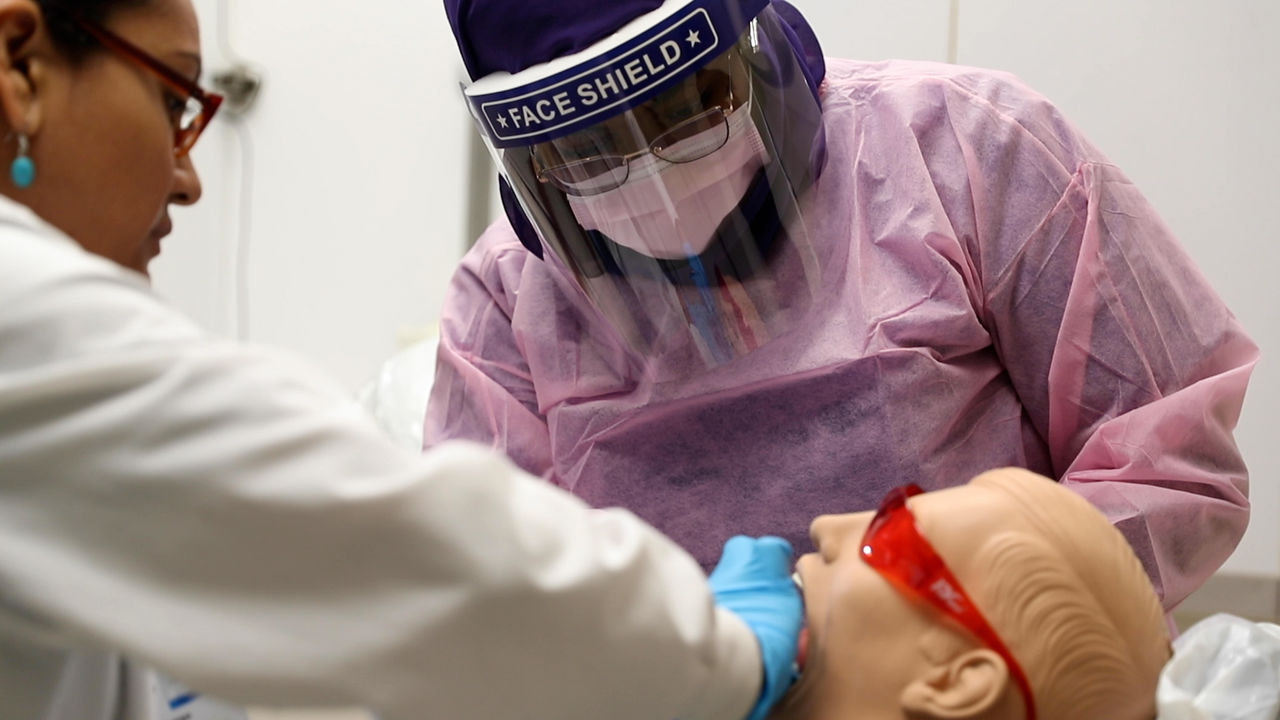
Being a dental assistant takes more than simply handing over tools to the dentist—there are key skills that make this role truly essential. Dental assistants are the backbone of any dental practice. They balance technical know-how with people skills, working closely with dentists, hygienists, and patients to ensure each appointment runs smoothly and efficiently.
Completing a dental assisting training program is a great way to develop the dental assistant skills necessary to pursue this role. Before we break down six of the most important skills that set great dental assistants apart, let’s first highlight what dental assistants do each and every day and why you may want to consider this critical role as a career path.
What Do Dental Assistants Do?
Working mostly in dental offices and interacting frequently with patients and dentists, dental assistants have a variety of clinical and administrative responsibilities.
Dental Assistant Job Responsibilities
Dental assistants’ specific duties vary according to the regulations of the state where they work. Typical responsibilities include the following:
Preparing patients and the treatment area for dental procedures
Sterilizing dental instruments and equipment
Assisting dentists during patients’ procedures
Using suction devices to dry patients’ mouths during treatment
Educating patients about good oral hygiene
Maintaining up-to-date patient records
Scheduling dental appointments
Speaking with patients about billing and payments
Taking X-rays of patients’ teeth under the supervision of a dentist
Some states allow dental assistants to provide patient services such as polishing teeth and applying topical anesthetic. In fact, many states are broadening the scope of dental assistants’ work to address oral care provider shortages.
Why Become a Dental Assistant?
While one of the chief benefits of becoming a dental assistant is the faster-than-average job growth in the field, there are other benefits as well. Among them are the following:
Completing training quickly: Training programs for dental assistant roles typically can be completed more quickly than the four-year degree programs required for other roles.
Engaging in a variety of tasks: Depending on the state where they work, dental assistants can have responsibilities as varied as scheduling appointments and inserting temporary restorations.
Making an impact: Dental assistants play an important role in improving people’s oral health, and those working in areas where their responsibilities are expanding to provide care for underserved populations can make a significant difference in patients’ lives.
Meeting new people: Frequent interactions with a number of patients as well as other dental professionals makes the dental assistant role an interesting one.
6 Skills Dental Assistants Should Have
Following are six key dental assistant skills that are important for success in the position:
1. Clinical Skills
Dental assistants need to understand the procedures and equipment associated with the many patient treatments they assist with or provide. They should have the skills to use tools such as:
Oral evacuation equipment to remove fluids and debris from patients’ mouths
Oxygen and nitrous oxide tanks to manage patients’ anxiety and pain
Computers to access records that guide treatment plans
Ultrasonic units to assist in teeth cleaning
X-ray equipment to produce images of patients’ teeth
Substances and tools to sterilize dental instruments and rooms
2. Attention to Detail
Performing a broad range of tasks, many of which require following complex directions and meeting strict regulatory guidelines, calls for strict attention to detail. Dental assistants must be attentive to:
Following mandated sterilization procedures
Noting patients’ comfort levels during treatments
Recording treatment details accurately
Completing patients’ procedures and administrative tasks thoroughly
3. Manual Dexterity
Dental assistants’ work involves navigating tight spaces in the mouth. To be able to maneuver the various instruments they use in administering or assisting with dental procedures, they need to be good with their hands.
4. Listening Skills
Listening is another important dental assistant skill. These professionals must be able to follow directions from dentists and other dental professionals when completing their tasks. They also must have the ability to focus on — and understand — any concerns that patients describe, so they can respond accordingly and convey those issues to their colleagues.
5. Compassion for Patients
The Cleveland Clinic reports that more than a third (36%) of Americans have a fear of visiting the dentist. Dental assistants play an important role in allaying these fears and in helping those who are sensitive to the pain that many associate with dental procedures. They must be able to show compassion as they help patients feel comfortable and explain what to expect.
6. Organizational Skills
Organizational skills are critical for success as a dental assistant. These skills are important when performing administrative tasks like appointment scheduling and record-keeping, as well as clinical work like ensuring proper placement of dental equipment and tools.
Benefits of a Dental Assisting Training Program
The educational and training requirements for becoming a dental assistant vary by state, but completing a dental assisting training program offers a variety of benefits regardless of the eligibility criteria in a particular location.
These programs help aspiring dental assistants ensure they will be ready to successfully manage their responsibilities as soon as they start working. To help students prepare, most of these training programs — which typically take as little as one to two years to complete — focus on teaching dental assistant skills through:
Classroom work
Hands-on training
Practical experience
In most states, graduates may qualify for entry-level positions immediately after completing a program, but some states require dental assistants to pass an exam to begin practicing.
Gain the Dental Assistant Skills to Launch Your Career
If becoming a dental assistant sounds like the right fit for you, now is the perfect time to take the next step. The dental assisting training program at Fortis combines classroom instruction with hands-on practice under the supervision of passionate instructors who bring real-world experience to the program. Complete the form on this page to request more information.
Recommended Readings
Beyond the Dentist’s Chair: Career Opportunities for Dental Assistants
Dental Hygienist vs. Dental Assistant: What’s the Difference?
Role of Dental Hygienists and Assistants in Pediatric Dental Care