
3 Key Takeaways:·
- AI is transforming the HVAC industry through predictive maintenance, smart diagnostics, automated scheduling, and energy optimization, helping technicians and businesses work more efficiently.
- HVAC professionals who understand AI tools, data interpretation, and modern building technologies may have an advantage as the industry continues adopting more advanced systems and workflows.
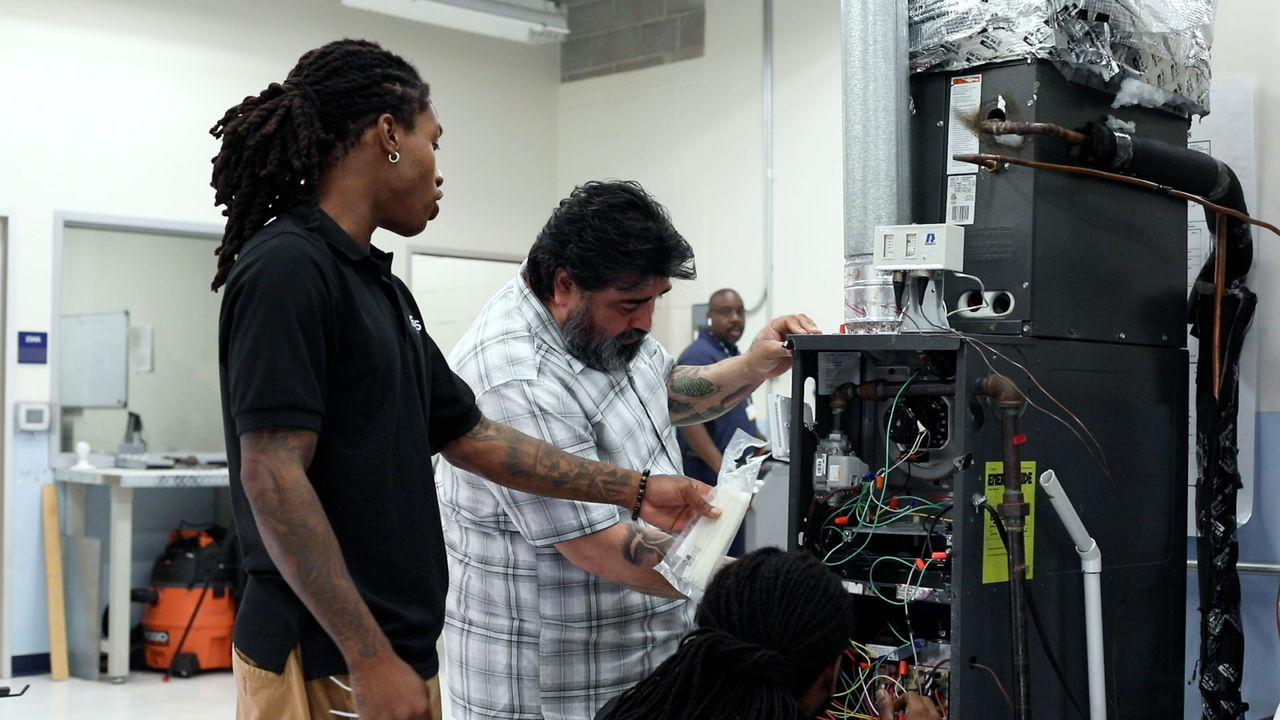
- The Fortis HVAC Training Program combines hands-on technical training with industry-relevant skills to help students prepare for today’s evolving HVAC workforce.
Artificial intelligence (AI) is quickly reshaping industries — and heating, ventilation, and air conditioning (HVAC) is no exception. From smart thermostats that learn your preferences to advanced systems that can predict equipment failures before they happen, AI is changing how heating and cooling systems are installed, maintained, and optimized. So how exactly is AI being used in HVAC, and what real benefits does it deliver? Let’s take a closer look.
HVAC AI is finding a place on job sites and inside the HVAC systems themselves. Part of what is driving the shift to using AI is the scale of the investment in its digital infrastructure. According to 2025 research by McKinsey & Co., AI data centers worldwide are projected to require $6.7 trillion in investment to meet the need by 2030. These facilities depend on skilled tradespeople to build, maintain, and operate the physical infrastructure that keeps them running.
If you are considering pursuing a career in the HVAC trade, the first step is learning how long HVAC training takes, and what that path looks like in a training program such as Fortis’s HVAC Training Program.
Can AI Be Used in HVAC?
HVAC AI has many uses, and it can be found everywhere in buildings from mechanical rooms to business offices. AI tools are being used to assess large amounts of data drawn from HVAC system sensors, weather forecasts, usage patterns, and past records to find insights that help technicians and business owners make better decisions.
Right now, AI is having a big impact in these four areas.
- Predictive Maintenance
Traditional maintenance schedules are based on fixed time intervals. With predictive maintenance enabled by AI, sensors can monitor equipment in real time, and machine learning algorithms can detect early signs of wear before something breaks. This type of maintenance can reduce operational costs by 17.6% and maintenance costs by 13.2%, according to a Digital Engineering study. For technicians, this means fewer emergency calls and more time for planned work. - Smart Diagnostics
About 80% of issues in wired HVAC systems are caused by wiring errors, according to Contracting Business. HVAC AI can be employed to help technicians identify the root causes of these problems faster. It provides key data, in areas such as airflow, refrigerant levels, and system error codes, that can be used to help reduce the number of issues caused by these errors. - System Design and Load Calculation
To size an HVAC system effectively, technicians look at several important factors that include the space’s dimensions, how it is insulated, the local climate, and how many people will be in the building. AI tools can be employed to help contractors select the best equipment. These tools can simulate worksite conditions and quickly provide accurate system sizing, making the process smoother. - Scheduling and Operations|
HVAC AI is changing how contractors operate, freeing up time for them to focus on more important work. For example, an HVAC AI tool can be used to optimize technicians’ schedules in real time, taking their location, job priority, and scheduling gaps into account. AI tools also can be used to automate invoicing, customer follow-up, and lead management.
What Are the Benefits of AI in HVAC?
Across residential, commercial, and industrial settings, HVAC AI can be used to produce real, measurable results for technicians and the businesses they work for. Here are four areas where those benefits are clear.
- Lower Energy Costs
According to Energy Star, HVAC systems account for roughly 40% of the energy consumption in data centers on average. HVAC AI controls that adjust the buildings’ heating and cooling based on their occupancy, the weather, and their real-time usage patterns can put a meaningful dent in that figure, helping building operators reduce waste without sacrificing performance. - Fewer Unexpected Breakdowns
When AI tools are used to identify potential HVAC system failures in advance, building owners can reduce the number of emergency service calls to HVAC technicians they need to make and the costs that come with them. Predictive maintenance uses AI and machine learning to identify failure points before they occur, allowing systems to operate more consistently without breakdowns and with more manageable costs. - Faster, More Accurate Diagnostics
HVAC AI tools can be used to help technicians reach accurate diagnoses of troubled systems more quickly. This can translate into more jobs completed by technicians per day and fewer callbacks. According to Simpro, 69% of field service companies plan to use AI tools to optimize their workflows — a strong indicator of where the industry is heading. - Stronger Business Operations
By using them to assist with everything from smarter scheduling to automated billing, AI tools can cut the administrative load that can make small and midsize HVAC companies less efficient. According to a Housecall Pro survey, AI users in field service report saving an average of 3.2 hours per week due to the technology. It also found that 40% of technicians say they do not understand how HVAC AI could help their business, creating an opening for those who do
What AI Skills Do HVAC Professionals Need?
HVAC contractors who learn to work with AI tools will have an advantage in the field. Here are four key AI-related skills they should develop.
- Tech Fluency
Familiarity with software, smart thermostats, and building systems is essential. As the HVAC industry becomes more technology-focused, technology courses will become an increasingly more important part of HVAC training programs. - Data Literacy
HVAC technicians do not need to know how to code, but they should be able to understand what AI tools are saying. This means knowing how to read the information they provide about system pressure, error codes, and performance metrics, and how to use that information to make decisions. - Critical Thinking and Problem-Solving Capabilities
AI tools are capable of generating and processing large amounts of data and then offering useful insights and recommendations, but it takes technicians to decide what to do with that information. For example, how can alerts generated by AI be used to assess a situation and choose the right course of action? That is where the judgment of experienced HVAC technicians comes in. - Communication Skills
HVAC technicians use AI tools to identify issues and enhance their processes. However, they must also have strong communication skills. This allows them to clearly explain problems and solutions to homeowners and building managers.
Start Developing the Skills the Industry Needs
Skilled HVAC technicians continue to be in demand. The U.S. Bureau of Labor Statistics projects that positions for heating, air conditioning, and refrigeration mechanics and installers are expected to increase 8% between 2024 and 2034, far above the average for all occupations. What is expanding alongside that demand are the skills the trade requires, including proficiency in using HVAC AI tools.
Pursuing a career in HVAC requires technical ability and an understanding of how to work with modern tools. The Fortis HVAC Training Program prepares students for a career in HVAC with hands-on training that reflects the realities of today’s industry.
Find out how Fortis can help you start a rewarding career.
Recommended Readings
What I Like Best About Working in HVAC
HVAC Technician: Job Description, Requirements, and Outlook
The Career Path for HVAC