
Climate change, seasonal fluctuations, and other factors affect living and working environments, including rising temperatures. According to 2023 U.S. Energy Information Administration (EIA) data, as reported by Climate Central, residential buildings will see a projected 71% increase in cooling demand by 2050, with commercial building demand increasing by 30% over the same period.
Heating, ventilation, and air-conditioning (HVAC) technicians will be needed not only to install more systems but also to ensure that they operate efficiently — otherwise, power grids across the country may not be able to take the heat.
For this reason, there has never been a better time to learn the trade. To help you launch your own career, here is an overview of a typical HVAC technician job description, including what skills you’ll need and how enrolling in an HVAC training program can get you started.
HVAC Technician Job Description
HVAC systems help circulate air and regulate temperature in both commercial and residential buildings. Sometimes, these systems are called HVAC-R systems to include refrigeration. As an HVAC technician, you would be responsible for installing, maintaining, and repairing these systems.
As such, HVAC technician job descriptions often include responsibilities such as:
Cleaning out air ducts
Changing filters
Testing HVAC systems to ensure that they are operating properly in different settings
Inspecting all physical components of an HVAC system
Replacing broken or old components
Upgrading HVAC systems
Educating clients about regular upkeep
Installing HVAC systems in existing buildings and new construction
Ensuring that all components and systems comply with environmental and energy regulations
Your exact duties as an HVAC technician can vary depending on whether you work for a company or as an independent contractor. You may also specialize in a specific type of HVAC system or in residential or commercial settings.
HVAC Technician Work Environment
As HVAC and refrigeration systems are used in various buildings for different purposes, you’ll spend much of your time traveling to different worksites. You might find yourself working on slippery rooftops, in dark crawl spaces, or outdoors in the middle of a heat wave. Safety is crucial in these environments.
Examples of locations where HVAC technicians may work include:
Factories
Retail stores
Office buildings
Schools
Hospitals
Residential homes and apartments
Where you work will depend on the types of clients you serve. For example, you or your company may have a contract with a company that owns multiple office complexes or factories. Other than that, you may also spend time in an office filling out paperwork or contacting clients.
HVAC Technician Education and Foundational Skills
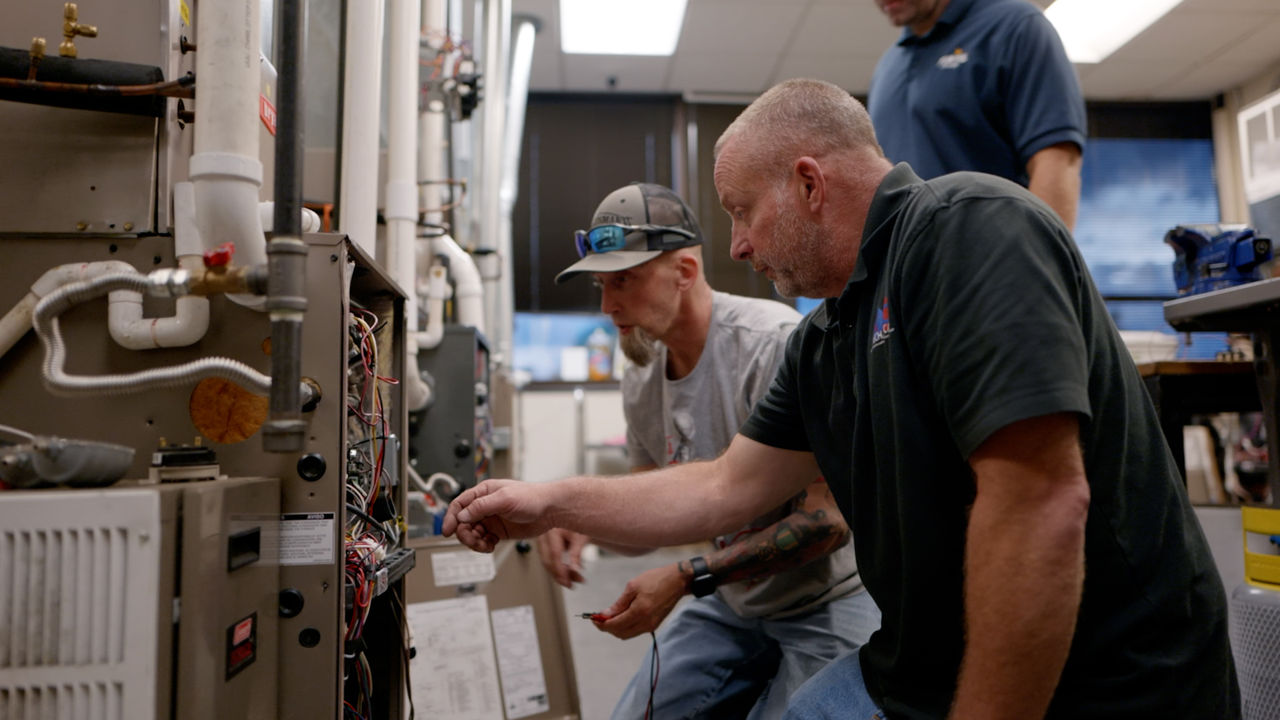
Most employers will look for HVAC technician job applicants who have completed postsecondary education, typically through a training program or trade school. These programs offer foundational training in HVAC and refrigeration systems, teaching students how to perform diagnostic tests and maintenance. Some of your training may take place in a classroom, but a well-designed program will give you plenty of hands-on practice, too.
In some states, you may also need a license to work as an HVAC technician. Before starting your career, it is important to research regulations in your area. If you want to work with refrigeration units, you will need to earn your Section 608 Technician Certification, which covers three types of refrigeration systems. This certification is offered by the U.S. Environmental Protection Agency (EPA).
No matter where you start your career or what type of training program you choose, you will need to develop skills in a few key areas.
1. Mechanical Knowledge
A key part of the HVAC technician job description involves installing and maintaining HVAC and refrigeration systems, which requires extensive mechanical knowledge of the technologies that operate these systems. Some systems may use a combination of digital and analog controls, with various facilities using different interfaces for the same type of system depending on its age, size, or cost. HVAC technicians must know how to configure each type of interface.
2. Technical Skills
In addition to knowing the ins and outs of different systems, HVAC technicians need to know how to use a wide range of tools. While this includes the specialized tools used to install and repair equipment, it also includes pressure gauges, voltmeters, and other inspection devices.
3. Customer Service
HVAC technicians regularly interact with their clients, both to explain how to use HVAC systems and to best understand clients’ needs. Engaging with clients can help ensure customer satisfaction, which is key for continuing the relationship if the client needs ongoing repairs or maintenance. It could also potentially lead to new clients through word-of-mouth referrals.
4. Detail Oriented
HVAC technicians must maintain records of their equipment use, hours worked, and work performed. Your employer will need this information to verify payments and track when equipment needs replacement or restocking. Keeping detailed records is especially important if you want to work independently or run your own company.
5. Artificial Intelligence Skills
Artificial intelligence (AI) isn’t replacing HVAC technicians — but it is changing how the job gets done. From predicting system issues before they happen to improving energy efficiency and managing air quality, today’s systems are getting smarter. Many are even connected to user-friendly, AI-powered apps. That means technicians who understand how to work with these tools — and make sense of the data they provide — can bring even more value on the job.
Job Outlook for HVAC Technicians
The job outlook for HVAC technicians is positive. The U.S. Bureau of Labor Statistics (BLS) projects positions for HVAC mechanics and installers to grow by 8% between 2024 and 2034 — equivalent to an average of 40,100 job openings per year. This is faster than the 3% average growth rate for the U.S. job market as a whole.
The BLS bases this projection on the continued construction of commercial and residential buildings in need of climate control. With the increased emphasis on energy efficiency and emission control, HVAC technicians may also see job growth as older systems are replaced or repaired to meet new standards.
Start Your Career as an HVAC Technician
With HVAC training programs located in 14 states, Fortis can help you launch your career in the ever-changing HVAC industry. After learning the basics of thermodynamics and electricity, you will take classes on refrigerants, residential air, industrial and commercial HVAC systems, and more.
Curriculum may vary slightly by state, but the Fortis skilled trades programs are led by knowledgeable instructors who guide students through hands-on, career-focused exercises. With that kind of training, you can become an HVAC service technician, installation technician, or apprentice heating technician. From there, you can take your career in any number of directions.
To find out about Fortis HVAC training programs in your area, request more information today.
Recommended Readings
How Long Is HVAC Training?
How to Become an HVAC Contractor
What I Like Best About Working in HVAC