
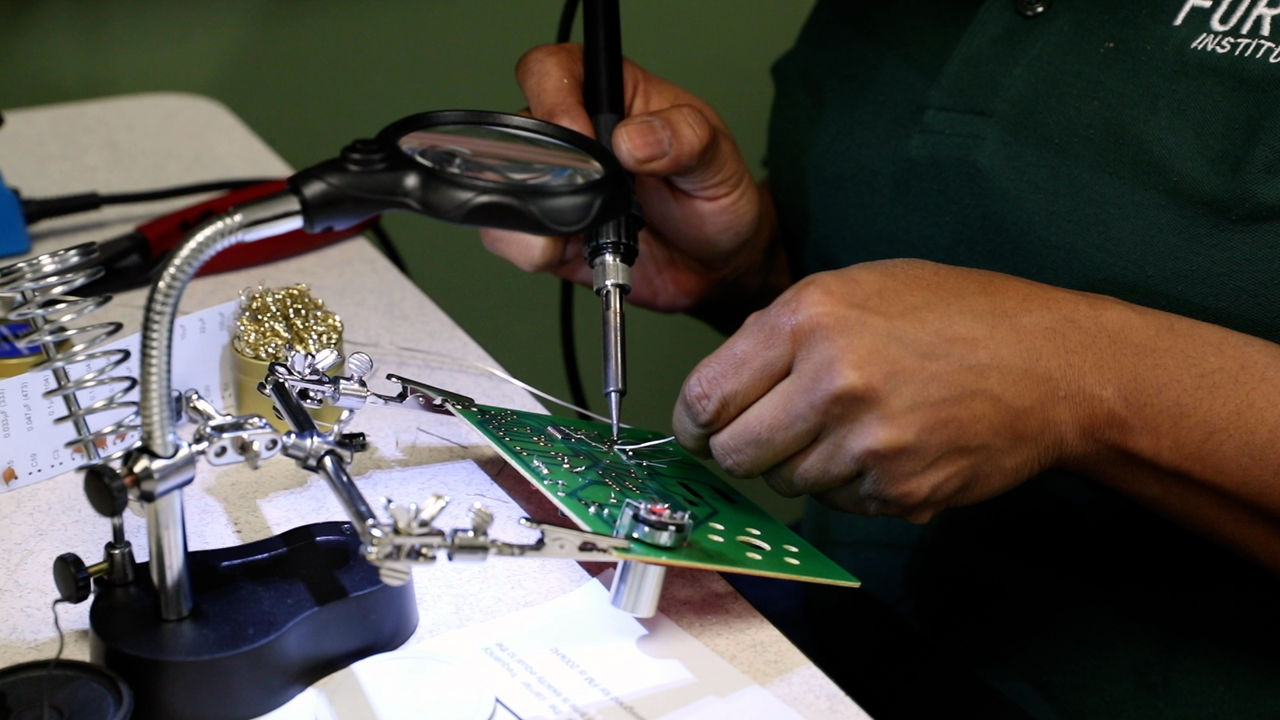
Flip a switch, charge your phone, start your car — electricity keeps nearly every part of daily life running. Behind the scenes, skilled professionals like electricians, engineers, and electrical systems technicians make it all work. They design, install, maintain, and repair the low-voltage systems and equipment that power homes, businesses, and the technology people rely on every day.
If you’re tech-savvy and have a passion for fixing and maintaining electrical equipment, becoming an electrical systems technician may be a perfect fit. These professionals work everywhere, from homes to factories, and on everything from televisions to transformers. Understanding their duties, key skills, and employment requirements is the first step. From there, you can complete a technician training program and dive right in.
What Does an Electrical Systems Technician Do?
Electrical systems technicians are involved in the design, testing, installation, maintenance, and repair of a wide range of low-voltage electrical systems and equipment. This includes computers, semiconductors, circuit boards, communications technology, and medical and navigational equipment.
Technicians often work closely with electrical engineers to develop engineering plans for these industrial, commercial, and home technologies. Typically, technicians test and inspect the designs the engineers create, identify issues, and offer recommendations. They may also support product evaluation and testing, using diagnostic devices to test, adjust, and repair low-voltage electrical equipment.
As you explore job postings, you’ll notice some differences between positions with specific companies, but some of the more common duties you may see include the following:
Installing, maintaining, and repairing electrical systems and equipment
Troubleshooting issues with electrical systems and equipment, such as checking for faulty wiring or short circuits
Servicing the components that power electrical systems and equipment
Supporting electrical engineers in the development of engineering plans for electrical systems, including inspecting designs for quality control and recommending improvements
Testing the performance of electrical systems and equipment under simulated conditions
Work Environment for Electrical Systems Technicians
Electrical systems technicians may work in various settings, including offices, laboratories, construction sites, and factories. No matter where you work, though, safety procedures will be key to your and your team’s safety.
According to the U.S. Bureau of Labor Statistics (BLS), electrical and electronic engineering technologists and technicians held approximately 93,700 jobs in 2024. The following sectors were among the largest employers of these professionals:
Federal government: 13%
Engineering services: 12%
Semiconductor and other electronic component manufacturing: 11%
Navigational, measuring, electromedical, and control instruments manufacturing: 7%
Utilities: 6%
Electricians vs. Electrical Systems Technicians
Although at first glance they may appear to be very similar roles, several differences exist between electricians and electrical systems technicians.
Scope of Responsibilities
Electricians generally have a broader range of responsibilities, while electrical systems technicians have a more specialized role. Both electricians and technicians maintain and repair all manner of electrical systems and equipment. Electricians, however, are typically more involved in installation than technicians.
Equipment Serviced
Technicians usually specialize in working with low-voltage systems, which generally range from 0 to 50 volts. Examples of low-voltage applications include audio/video integration, home security systems, and household appliances. For example, a large growth area for low-voltage applications is smart home technology.
High-voltage systems (1,000 to 500,000 volts) are used in power generation, transmission, and distribution. They can also be used to power electrical equipment, such as motors, generators, and transformers. Electricians typically work with this type of equipment.
Work Settings
Many technicians work in commercial and industrial settings, such as offices or factories. Electricians often work in a broader range of settings, including commercial, industrial, and residential. They may be hired by homeowners, landlords, or business owners to install or repair electrical systems and equipment.
One additional difference is that electrical systems technicians typically work for an organization, often supporting electrical engineers. Electricians, on the other hand, may work independently as business owners, or they may be employed by an organization or electricians union.
Education and Experience Requirements for Electrical Systems Technician
Electrical systems technicians typically need at least a certificate, a diploma, or an associate degree. Training programs combine classroom instruction and hands-on learning, allowing students to gain foundational knowledge and develop the key skills they need to launch their electrical systems technician careers.
During your training, you will learn about important topics such as building codes; safety practices; and federal, state, and local regulations. Before you start actually practicing your skills, you will also learn the basic concepts of electrical theory and learn about topics such as Ohm’s Law, electrical quantities, resistors, and circuits.
During laboratory activities, you will engage in real-world simulations that help you develop the practical and technical skills you will use in the field, including how to install and troubleshoot digitally integrated systems and networks.
Certification
Although they are typically optional, a number of professional certifications are available to help you hone your skills and show off your expertise to employers. For example, you can get certified in fire alarm systems, electrical power testing, and safety. NICET, ETA International, and the International Society of Automation (ISA) are among the organizations that offer relevant certifications.
Key Skills
No matter what type of training program you choose, you’ll want to develop and practice a few key skills. These range from technical and mechanical skills to interpersonal skills.
Key skills you will need as an electrical systems technician include the following:
Attention to detail: Technicians need to have a keen eye for detail to ensure the utmost accuracy when assembling, maintaining, or repairing electrical systems and equipment.
Ability to read technical documents: Technicians must be able to understand and interpret electrical schematics, blueprints, and diagrams.
Mechanical and technical skills: Technicians need to be adept at using hand tools and other equipment, particularly when working with small circuitry and other sensitive components.
Proficiency in math: Technicians rely on mathematical skills for various tasks, including analyzing designs for electrical systems and troubleshooting issues with faulty equipment.
Teamwork and communication: Technicians work as part of a team, often supporting electrical engineers, and they may collaborate with electricians and other professionals on projects.
Artificial intelligence: AI is used to monitor electrical systems, predict maintenance needs, and aid in the design of electrical systems. Employers will need technicians to use these tools and assist clients with their own AI-powered systems.
Depending on which sector you go into, you may also need to develop more specialized skills. For example, working on home theater systems requires a slightly different skill set than focusing on computer networks. Either way, mastering the basics is a great way to get started.
Employment Outlook for Electrical Systems Technicians
The BLS expects an average of 8,400 job openings for electrical and electronic engineering technologists and technicians each year between 2024 and 2034. New construction projects, the shift toward alternative energies such as solar, and the emergence of power-hungry technologies such as AI are some of the driving forces behind this growth. Also, as older technicians retire, new professionals will need to step up and take their places.
If you are still considering your options, think about all of the everyday products that now use some sort of sophisticated low-voltage system: cars, mobile devices, appliances, and smart devices of all kinds. In addition, communities across the country are constantly updating their traffic systems, electronic toll collection (ETC) systems, and other infrastructure. They will need skilled electrical technicians to install, maintain, and repair these systems.
Take Charge of Your Future With Fortis
The efficiency, reliability, and safety of everything around us relies on electrical systems technicians. As these systems become more common and more sophisticated, the skills you stand to learn by becoming a technician may very well be some of the most in demand in the economy. The Fortis Electrical Systems Technician program can get you started.
Available at our Wayne and Lawrenceville campuses in New Jersey, this program balances classroom learning with hands-on activities. After learning the mathematics and scientific principles behind electricity, you will get to apply that knowledge to circuitry design, residential construction, communications, surveillance, and more. Whichever direction you want to take your career, Fortis can be your launchpad.
Learn more about how Fortis can help you launch your career by requesting more information today.
Recommended Readings
4 Reasons to Consider a Career as an Electrical and Electronic Systems Technician
Acing the Skilled Trades Interview
Benefits of Trade School: Why a Hands-on Skilled Trades Career Might be a Good Fit