Key Takeaways
Texas spends nearly $90 million each year on commercial construction alone — twice as much as any other state, according to a 2025 report by Twisted Nail.
Residential and commercial construction activity in Texas is driving demand for heating, ventilation, and air-conditioning (HVAC) professionals and other skilled trades workers.
Employment of HVAC technicians in Texas is expected to grow rapidly over the next several years, creating thousands of new jobs, according to Projections Central.
Across the United States, residential and commercial construction activity is booming. Texas, in particular, stands out as one of the nation’s leading construction markets, fueled by an influx of new residents and major public- and private-sector investment. According to a 2025 report from construction trucking company Twisted Nail, Texas spends nearly $90 million annually on commercial construction alone — twice as much as any other state.
A boom in construction means greater demand for a host of skilled trades workers, including electricians, welders, and heating, ventilation, and air-conditioning (HVAC) technicians, or HVAC techs. HVAC techs install, maintain, and repair climate-control systems in residential and commercial settings, from overseeing new installations to retrofitting older systems for greater energy efficiency.
For aspiring HVAC techs, Texas represents one of the nation’s most promising landscapes for launching a career in the skilled trades. Understanding what it takes to enroll in an HVAC trade school in Texas — and the unique benefits of working in the state — can help aspiring technicians navigate the admissions process and enter the workforce prepared.
What Do You Learn in HVAC School?
HVAC trade schools help students develop the foundational knowledge and technical expertise to start a career in this growing field. The curriculum of an HVAC training program covers the fundamentals of working with various climate-control systems, encompassing every aspect of service, from installation to repair and replacement.
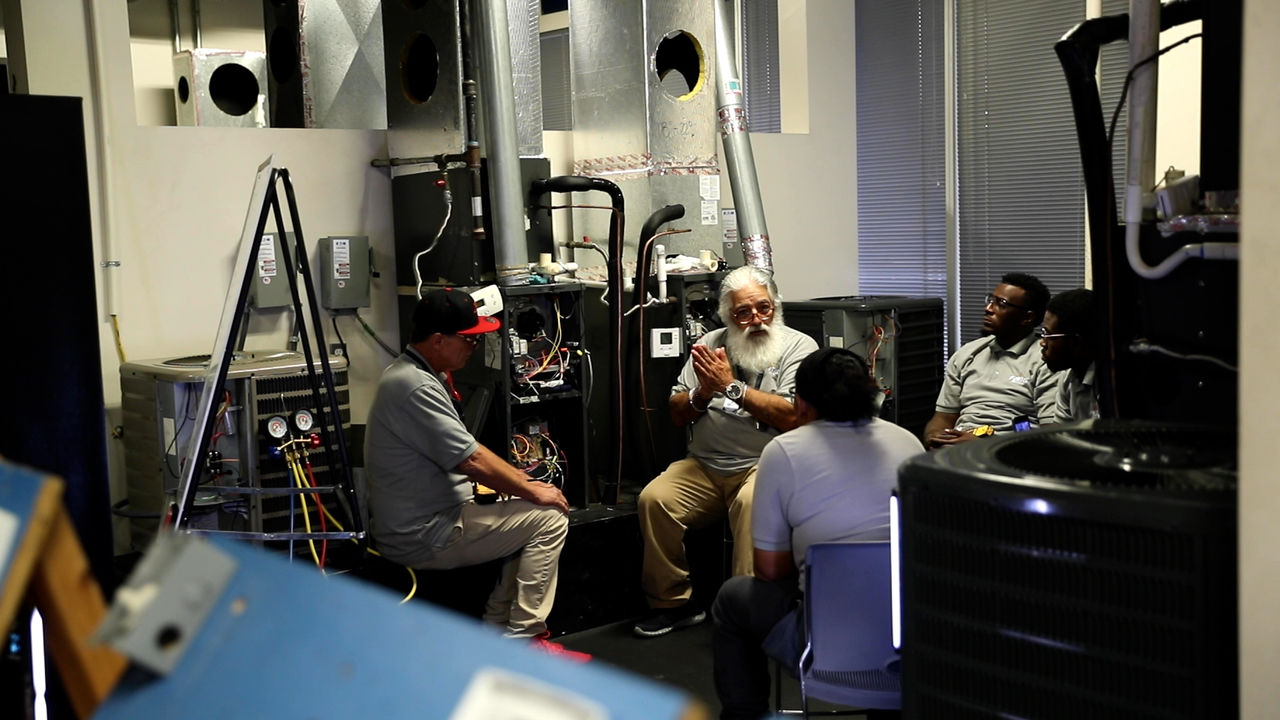
Fortis College offers HVAC training at both of its Houston campuses, designed to build hands-on technical skills, practical knowledge, and confidence for entry-level HVAC Technician opportunities in the workforce. Students learn through a combination of classroom lessons and onsite HVAC lab work. Core coursework covers the following subjects:
Thermodynamics
Residential and commercial air-conditioning
Heating systems, including electric, oil, and gas systems
HVAC troubleshooting and service calls
Refrigerants
The program emphasizes practical experience, allowing students to use and become proficient with the same tools and equipment that HVAC professionals use in the field: voltmeters, thermometers, pressure gauges, manometers, and other testing devices.
The Fortis HVAC programs are also designed to prepare students for the EPA Section 608 certification exam, which technicians must earn to work with refrigerants. Since most HVAC jobs entail handling refrigerants or servicing systems that contain them, EPA Section 608 certification is often essential.
HVAC Trade School Requirements in Texas
Enrolling in the Fortis HVAC programs in Texas is a relatively straightforward process, especially compared with typical college degree programs, which often require applicants to provide test scores, essays, and letters of recommendation. To be eligible for HVAC training at Fortis, prospective students need to:
Hold a high school diploma or an equivalent credential
Be at least 17 years old
Complete an application
Interview with an admissions advisor or other administrative staff member
Achieve a passing score on the Wonderlic Scholastic Level Exam (SLE)
Once enrolled in the program, students must complete approximately 48 instructional weeks of training — a little less than a full academic year.
Upon graduating, students are eligible to sit for the EPA Section 608 certification exam.
Benefits of Attending HVAC Trade School in Texas
Completing HVAC training in Texas offers numerous benefits, including some unique to the Lone Star State, which has one of the nation’s most robust job markets for HVAC professionals. Below are some of the most significant benefits of pursuing an HVAC education in Texas.
Real-World Skill Development
The blend of classroom learning and hands-on practical experience at Fortis help students develop an array of valuable skills, gain technical proficiency with industry-standard diagnostic tools and equipment, and hone their critical thinking and problem-solving competencies. This not only allows graduates to enter the industry as entry-level HVAC Technicians but but also lays the foundation for long-term success as HVAC professionals.
Regional Construction Boom
The Houston area — and Texas more broadly — is in the midst of a residential and commercial construction boom. Texas remains one of the top destinations for relocation, fueling population growth and sustained housing demand. Houston has emerged as one of the nation’s leading development hubs. According to RentCafe, Texas was on track to open more than 81,000 new apartments in 2025 — the most in the country by far — with Houston ranked No. 8 among all U.S. metropolitan areas for new apartment completions. Meanwhile, the state is also attracting major commercial investment, including several multimillion- and multibillion-dollar construction projects, from massive semiconductor plants and data centers to alternative energy and healthcare facilities. This construction translates to abundant job opportunities for HVAC techs and other skilled trades workers.
Strong Employment Growth
New residential and commercial construction, along with upgrades and retrofits of existing climate-control systems, is expected to drive demand for HVAC techs in the coming years. Nationally, the U.S. Bureau of Labor Statistics (BLS) forecasts 8% employment growth (34,500 net new jobs) for HVAC techs between 2024 and 2034.
In Texas, growth is projected to be even faster. Throughout the next decade, employment of HVAC Technicians is projected to increase by 17.4% in the state, according to Projections Central, creating nearly 5,700 new jobs — nearly 15% of all new jobs nationwide.
Forge a Skilled Trades Career in Texas
As population growth and construction activity continue to shape the Texas economy, the need for skilled HVAC professionals is poised to grow. For those seeking a hands-on career in an in-demand field, the Lone Star State offers fertile ground to start building a future in the skilled trades.
If you are thinking about going to HVAC trade school in Texas, consider the HVAC training program at Fortis. With campuses in the North Houston and South Houston metropolitan areas, we provide hands-on instruction and dedicated career services to help you land a job in one of the nation’s most active markets for skilled trades professionals.
Learn more about how Fortis can set you on the path to a rewarding career.
Recommended Readings
HVAC Technician: Job Description, Requirements, and Outlook
What I Like Best About Working in HVAC
How to Know If a Career in Skilled Trades Is Right for You