
If you live in Georgia, you quickly become reliant on air-conditioning (AC) to fight the extreme heat. In 2024, nearly 3 in 5 residential households in the state used AC, accounting for approximately 42% of electricity sales, according to the U.S. Energy Information Administration (EIA). With so many relying on these systems, skilled heating, ventilating, and air-conditioning (HVAC) technicians and HVAC-R technicians, who specialize in refrigeration, are always in demand. Becoming an HVAC contractor in the Peach State can be an excellent career choice, but Georgia has strict requirements, including licensure depending on the type of work.
Earning a Georgia HVAC license can help expand opportunities in the field, including becoming a contractor who works on AC units. Consider the benefit of an HVAC training program in preparing for this career and earning the necessary certification from the U.S. Environmental Protection Agency (EPA).
Benefits of a Georgia HVAC License
While a Georgia HVAC license is not required for entry-level work, it is required to become a full contractor with the ability to service AC units. According to data from Projections Central, positions for HVAC contractors in Georgia are projected to increase by 17.6% between 2022 and 2032. This is significantly higher than the 4% average growth rate for all occupations between 2023 and 2033 projected by the U.S. Bureau of Labor Statistics (BLS).
The BLS reports that construction of commercial and residential buildings will drive growth for HVAC technicians, as new buildings will require initial installations and ongoing upkeep. Older buildings will continue to require HVAC maintenance as they age, and evolving energy efficiency and pollution control goals will also drive demand for upgrades.
With Georgia projected to see temperatures above 96 degrees for nearly 12% of the year by 2050, according to ClimateCheck, the need for cooling systems will only increase over time. This may lead to even more employment opportunities for contractors who are licensed and skilled in working on AC units.
Georgia HVAC License Requirements
Georgia offers two different HVAC licenses with separate requirements:
Class 1 Restricted License: Permits HVAC contractors to work on equipment that produces no greater than 175,000 British thermal units (Btu) of heating and no greater than 60,000 Btu of cooling. Requires four years of experience.
Class 2 Nonrestricted License: Permits HVAC contractors to work with any type of equipment. Requires five years of experience, including with systems that produce greater than 175,000 Btu of heating and 60,000 Btu of cooling.
Training from a technical school and completion of a certification program can count toward these experience requirements. In addition, applicants for both types of licensure must also meet the following requirements:
Have at least a high school diploma or certificate of high school equivalency, such as a GED diploma
Submit three professional references
Pass a background check
Submit an application fee
Produce proof of citizenship or immigration documents
Applicants must also submit proof of EPA Type II or higher certification, which is required to work legally with refrigerants. HVAC training programs not only count toward experience requirements but also prepare students for the EPA exam. These HVAC training programs typically take up to 48 weeks.
How to Apply for a Georgia HVAC License
Prospective HVAC contractors looking to apply for a Georgia HVAC License must first submit an application form that covers personal information and work history, including any work in other states, along with all required materials as listed above. Any completed certifications or training program diplomas can also be submitted alongside the application. In addition to the application fee, a $10 processing fee is currently required.
Provided the Georgia State Construction Industry Licensing Board (CILB) accepts the application, prospective contractors may then take the Georgia HVAC licensing exam. The seven-hour exam, which is open book, covers HVAC subjects and requires a passing grade of 70%.
Licenses must be renewed every two years and currently costs $75 per renewal. Additionally, contractors must complete at least four hours of coursework each year to maintain licensure and must submit transcripts of these courses with their renewal. If their licenses have lapsed for longer than three years, contractors may need to go through the entire application process to renew.
Advance Your Career as an HVAC Contractor in Georgia
Earning a Georgia HVAC license is a critical step in expanding opportunities in the field to work on AC units of all sizes. To prepare for the HVAC licensing exam and EPA certification, consider the Fortis HVAC Training Program in Smyrna, just 10 miles northwest of Atlanta.
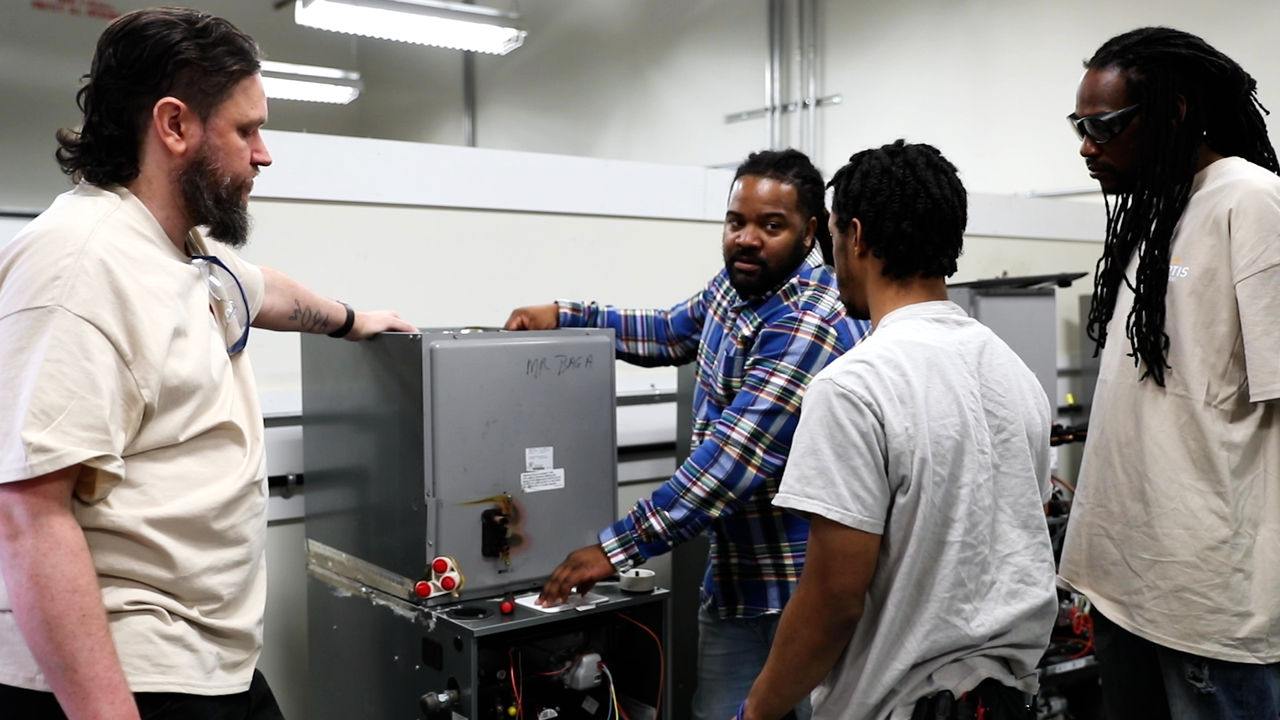
Our comprehensive program offers students training for entry-level roles as HVAC contractors or service technicians in as little as 48 weeks, alongside exam prep for the EPA’s universal certification exam. Students get hands-on opportunities with voltmeters, pressure gauges, and other testing devices. Coursework encompasses subjects such as HVAC-R controls, refrigerants, residential and commercial AC systems, diagnosing HVAC computer systems, and regional systems specific to Georgia and select other areas.
Find out how Fortis can help you start a rewarding career in the skilled trades today.
Recommended Readings
Are Skilled Trades in Demand?
How to Become an HVAC Contractor
How to Know If a Career in Skilled Trades Is Right for You