
Increased construction spending across residential, commercial, and industrial projects is expected to drive sustained demand for all manner of skilled trades professionals over the next several years.
Heating, ventilation, and air conditioning (HVAC) technicians, in particular, are well positioned for steady employment growth — as every new building needs an HVAC system. Moreover, continued demand for sophisticated climate-control technology, as well as a greater focus on energy efficiency and pollution reduction, means HVAC technicians will increasingly be called on to upgrade, repair, or replace existing systems.
The outlook for construction spending is especially strong in New Jersey. Even as national figures dip slightly, construction spending in New Jersey is projected to climb 17% from 2024 to 2025, according to a report in NJBiz. Over the next five years, planned spending on new construction projects is expected to exceed $140 billion — a signal of long-term demand for skilled trades workers like HVAC technicians.
Pursuing HVAC training in Lawrenceville or Wayne, New Jersey, can help individuals break into this growing field and find long-term success.
What Does HVAC Training Entail?
Although everyone’s HVAC career path is different, one of the key steps for most people is completing formal education and training through a postsecondary program. HVAC training programs teach both core concepts and theory as well as technical skills to prepare students for entry-level employment.
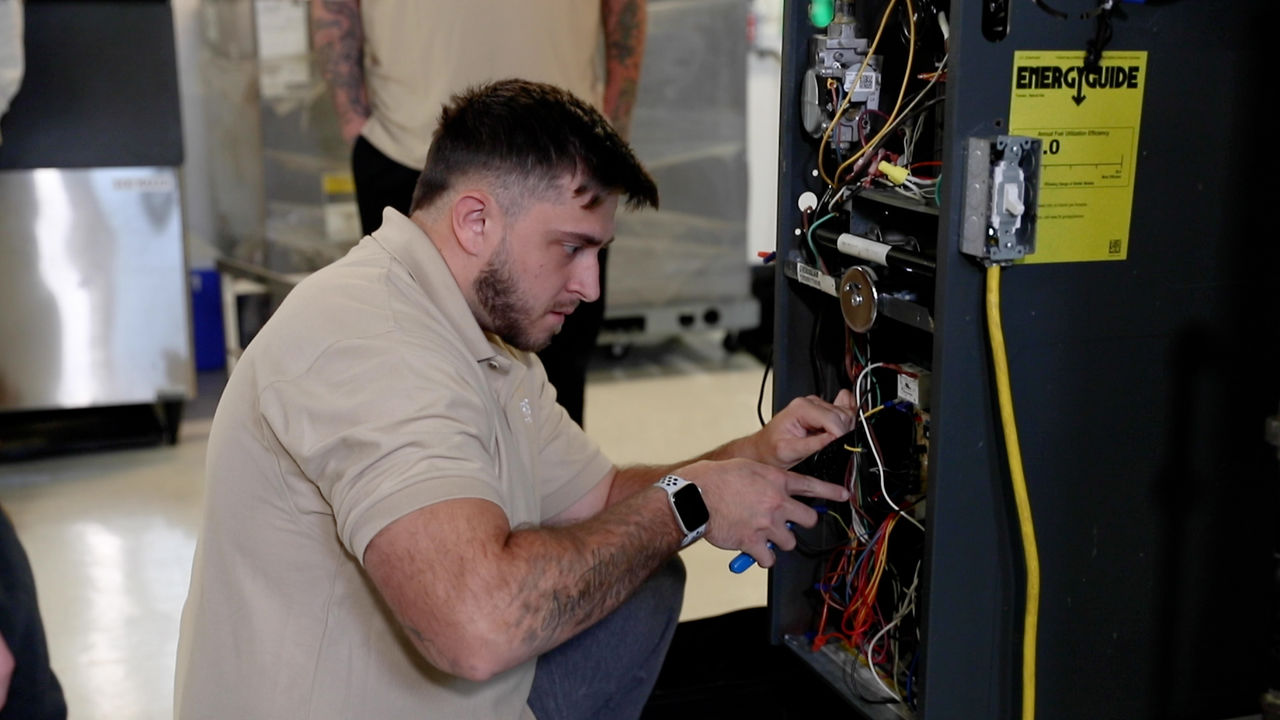
HVAC programs traditionally combine classroom instruction with hands-on lab-based practice, which allows students to develop fundamental technical know-how while also honing a practical skill set that empowers them to work with a variety of climate-control systems in residential and commercial environments.
Most programs take about a year or less to complete. Once they are employed, new HVAC technicians typically undergo a period of on-the-job training to further refine their skills, working alongside experienced technicians and gradually taking on more advanced responsibilities.
What Will You Learn in an HVAC Curriculum?
While specific curricula vary by institution, postsecondary HVAC training programs generally cover foundational topics such as electrical theory, principles of refrigeration, system controls, and troubleshooting best practices. The Fortis HVAC programs in New Jersey pair classroom instruction with hands-on training in labs, helping students build practical, job-ready skills.
The programs include coursework that covers the following areas:
Thermodynamics
Commercial and industrial refrigeration
Residential, commercial, and industrial air conditioning
Electric, oil, gas, and water-based heating systems
HVAC system design
Troubleshooting, maintenance, and service procedures
The programs also prepare students to earn Section 608 certification, which authorizes them to work with refrigerants, per Environmental Protection Agency (EPA) regulations. Because virtually all air conditioning and refrigeration systems use refrigerants, this certification is typically an essential step for anyone pursuing a career in HVAC. Earning this certification requires passing an exam.
What Key Skills Will You Gain in an HVAC Training Program?
An HVAC training program can equip students with the technical skills and professional competencies employers want — helping them land their first job in the field and laying the foundation for long-term professional success, including potentially becoming an HVAC contractor.
Through postsecondary training that blends practical lab work and classroom learning, students can hone the following abilities.
Mechanical skills: HVAC techs need to understand how to work with various complex climate-control systems, like air conditioners, refrigerators, and heating devices. HVAC programs can teach students how to service these systems and their components, including installation, maintenance, and repair. Hands-on training gives them the opportunity to work with the same tools that working professionals use, such as voltmeters, thermometers, and pressure gauges.
Blueprint-reading skills: HVAC professionals need to adhere to design specifications when installing systems. Understanding how to interpret a system’s blueprints and accurately position its components according to the design is a critical skill that helps technicians ensure the system performs properly and can reduce the need for repair or replacement.
Problem-solving skills: In addition to honing students’ understanding of the internal workings of climate-control systems, HVAC training can help them develop an eye for detail, enabling them to identify the origins of system malfunctions and determine how to fix them.
Technological skills: HVAC installation and maintenance often involve working with computerized components, including software programs that control systems. Knowing how to use these programs can help students diagnose issues and simplify maintenance and repair.
What Are the Other Benefits of HVAC Training in New Jersey?
Providing students with the skills to launch a career is the most obvious benefit of HVAC training. Completing one of Fortis’ HVAC programs in New Jersey offers students several other advantages as well — including some unique to the state — placing them in one of the nation’s major economic hubs where demand for HVAC professionals is expected to be high.
Expedited Career Path
The HVAC curriculum at Fortis streamlines students’ education by emphasizing job-specific knowledge and skills over general education coursework that does not directly apply to the field. As a result, they can complete training in less time than it takes to earn a traditional degree: The HVAC programs in Lawrenceville and Wayne take approximately 48 and 60 weeks, respectively, to complete, preparing students to enter the workforce in about a year.
Bright Job Prospects
Completing formal HVAC training through a postsecondary program can help individuals stand out in the job market. The comprehensive yet focused curriculum enables students to build practical skills and industry expertise across a wide range of types of projects and work settings. Additionally, by preparing students for the EPA Section 608 certification exam, the Fortis program positions them to earn a crucial — and often necessary — credential that can further set them apart from other job seekers.
Enter a Growing Field
The market for HVAC technicians is strong and growing, fueled by new residential and commercial construction, as well as upgrades and repairs to existing systems to improve their performance and energy efficiency. Across the U.S., employment of HVAC technicians is projected to grow by 8% between 2024 and 2034, adding about 34,500 new jobs to the workforce, according to the U.S. Bureau of Labor Statistics (BLS).
Job growth for well-trained HVAC technicians in New Jersey and the broader Mid-Atlantic region is expected to be similarly robust. Projections Central estimates steady to strong employment growth in the following states:
New Jersey: 7.4% growth, 750 net new jobs
Pennsylvania: 5.6% growth, 1,060 net new jobs
New York: 6.5% growth, 1,490 net new jobs
Maryland: 9.7% growth, 720 net new jobs
Your Future in the Skilled Trades Starts Here
By completing HVAC training in New Jersey — a state with booming construction activity and rising demand for skilled technicians — you can develop the skills and expertise required to launch a rewarding, hands-on career.
At Fortis, we offer HVAC training at our campuses in Wayne and Lawrenceville, providing flexibility and convenience for students throughout the region. Our comprehensive curriculum can help you gain the technical knowledge and practical experience you need to start strong and grow confidently in this growing field.
Take the first step on your professional journey with Fortis.
Recommended Readings
What I Like Best About Working in HVAC
HVAC Technician: Job Description, Requirements, and Outlook
HVAC vs. Electrician: Comparing Career Paths