
Population growth in states with warmer climates and a greater emphasis on energy efficiency are creating significant demand for heating, ventilation, and air conditioning (HVAC) systems across the U.S. Grand View Research projects that the HVAC market will expand substantially over the next decade, climbing from nearly $30 billion in revenue in 2024 to approximately $54 billion in 2033 — roughly 70% growth.
Increasing demand for HVAC system installations combined with a growing need to repair and retrofit older systems is likely to create a robust job market in the coming years for HVAC technicians. The professionals in this role are responsible for installing, maintaining, and repairing these systems. Employment of technicians is expected to grow nationwide, with particularly fast growth projected in Sun Belt states like Florida.
For those considering a career in a skilled trade like HVAC, understanding what it takes to become an HVAC technician in Florida — including the practical training required — can help aspiring technicians map out their career path and take advantage of the region’s growing demand.
What Does an HVAC Technician Do?
HVAC technicians work with climate-control systems that regulate temperature, humidity, and indoor air quality in residential, industrial, and commercial settings. Their work generally involves the installation, maintenance, and repair of these systems, though some technicians specialize in a particular aspect of HVAC work.
While the job description may vary depending on where HVAC Technicians work and their level of experience, their common responsibilities include the following:
Inspecting and testing HVAC systems and their components
Installing and wiring electrical components
Repairing and replacing worn or faulty parts
Explaining system issues to customers
Performing recommended maintenance to optimize system performance
Some technicians focus on niche areas of HVAC, such as radiant heating systems or commercial refrigeration. Adhering to industry standards and regulations, especially regarding the handling of refrigerants, is also a critical part of an HVAC technician’s job.
Steps to Become an HVAC Technician in Florida
Launching a career as an HVAC technician in Florida typically entails formal education and hands-on training, as well as earning the proper credentials. Everyone’s journey will look a little different, but following certain key steps can help prospective technicians start their careers with confidence.
Step 1: Education
Many aspiring HVAC technicians begin by enrolling in a postsecondary program that combines classroom instruction with hands-on training, and many employers prefer candidates with this kind of background.
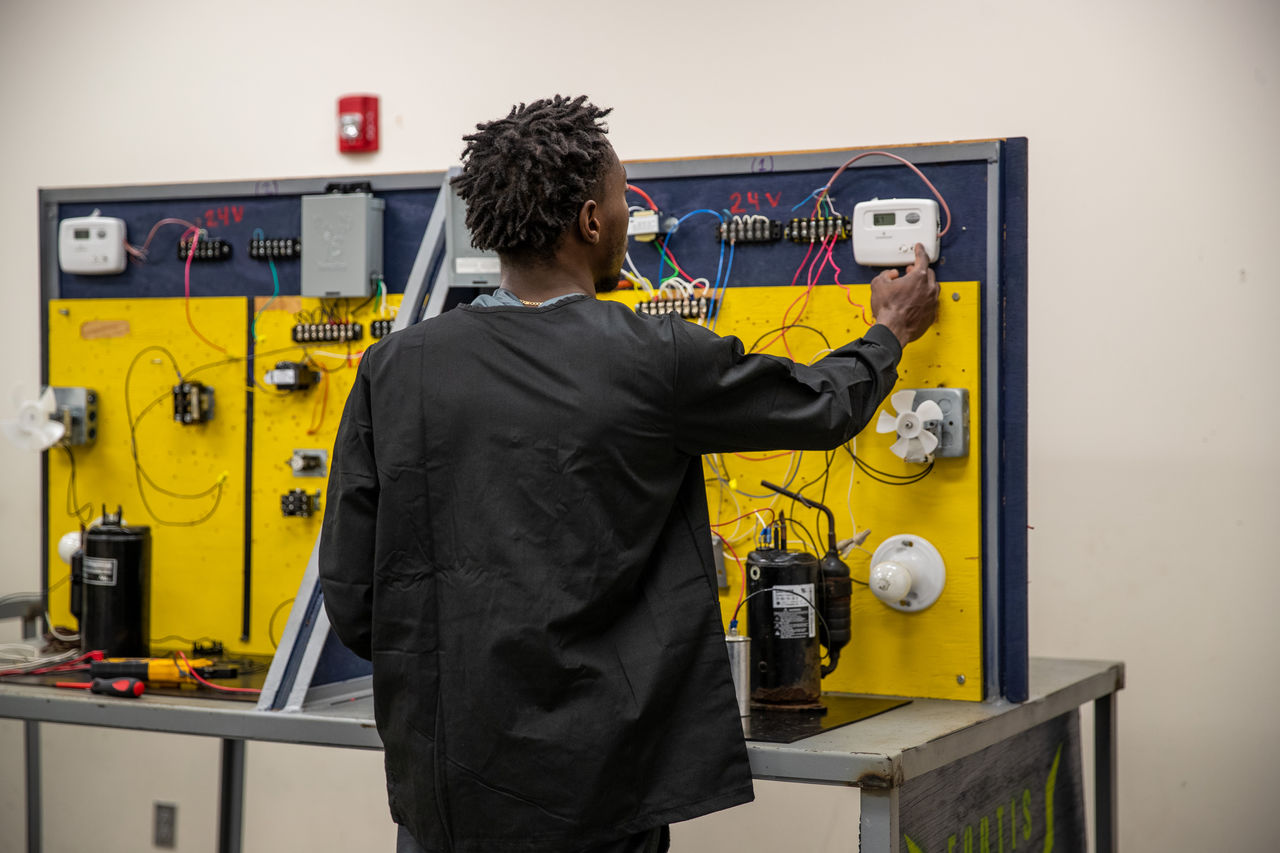
The HVAC program at Fortis is designed to be comprehensive yet focused, enabling students to earn their diploma and start their careers in less than a year. The curriculum — which includes practical training in labs using the same equipment professional HVAC technicians work with — teaches students how to service residential and commercial refrigeration systems, gas and oil furnaces, heat pumps, electric furnaces, and air conditioning equipment, preparing them for any of a range of entry-level roles in various professional environments.
Step 2: Practical Experience
Gaining field experience is an essential part of an HVAC technician’s career path. After completing a postsecondary HVAC program and landing their first job, most new technicians receive supervised field training to further refine the foundational skills and technical knowledge they gained in school. Work experience is also traditionally a prerequisite for HVAC licensure.
Step 3: Certification and Licensing
Virtually all HVAC technicians need to obtain Section 608 certification through the Environmental Protection Agency (EPA), which authorizes them to legally handle refrigerants. Since countless systems and devices — from air-conditioning units, refrigerators, and freezers to cold storage warehouses — use refrigerants, obtaining an EPA certification is generally a prerequisite for employment in the HVAC field.
Additionally, although licensure is not required to get a job as an HVAC technician in Florida, Florida is one of several states that requires HVAC technicians to hold a license before they can perform the full scope of work the job entails, including installation and repair. Unlicensed technicians can perform certain tasks, such as testing or cleaning an air conditioner, under the supervision of a licensed professional. But to take on more complex projects or acquire a permit, they need to be licensed.
Obtaining an HVAC license in Florida requires the following:
Possession of a high school diploma or an equivalent credential
Completion of a training program, either on the job or through a postsecondary institution
Work experience in the HVAC industry
Passing a trade knowledge exam and a business/finance knowledge exam
Applicants for HVAC licensure in Florida also need to pass a criminal background check and obtain general liability insurance.
Job Outlook for HVAC Technicians in Florida
Rising demand for sophisticated climate-control systems, along with a growing emphasis on energy efficiency and pollution reduction, is expected to create a favorable job market for HVAC professionals over the next decade. The U.S. Bureau of Labor Statistics (BLS) estimates that employment of HVAC technicians will grow by 8% between 2024 and 2034, creating about 34,500 new jobs nationwide.
Americans are increasingly moving to states with warmer climates, like Florida, Georgia, South Carolina, Alabama, and Texas. As the populations of these states continue to grow, as is expected, opportunities for HVAC work will likely expand in those states as well, creating abundant opportunities for new technicians.
Florida is projected to see the largest increase in HVAC employment, with roughly 6,200 new jobs expected to be added — translating to 17% growth — between 2022 and 2032, according to Projections Central.
Beyond Florida, employment of HVAC professionals across several Southern states will match or outpace the national average, according to Projections Central:
Georgia: 17.6% employment growth, 2,250 net new jobs
South Carolina: 7.7% employment growth, 460 net new jobs
Alabama: 9.8% employment growth, 650 net new jobs
Texas: 17.4% employment growth, 5,690 net new jobs
Launch Your HVAC Career with Fortis
Opportunities for HVAC technicians are rising across the U.S. — especially in warmer states like Florida. Becoming an HVAC technician in Florida requires a combination of education, training, and certification.
Fortis’ HVAC training program in Pensacola or Port St. Lucie can help you build the practical skills and technical expertise you need to start your career. Our focused curriculum, which balances classroom instruction with hands-on training, is designed to fast-track your path to a career in HVAC.
Take the first step toward a rewarding HVAC career with Fortis.
Recommended Readings
How Long Is HVAC Training?
What I Like Best About Working in HVAC
How to Become an HVAC Contractor