
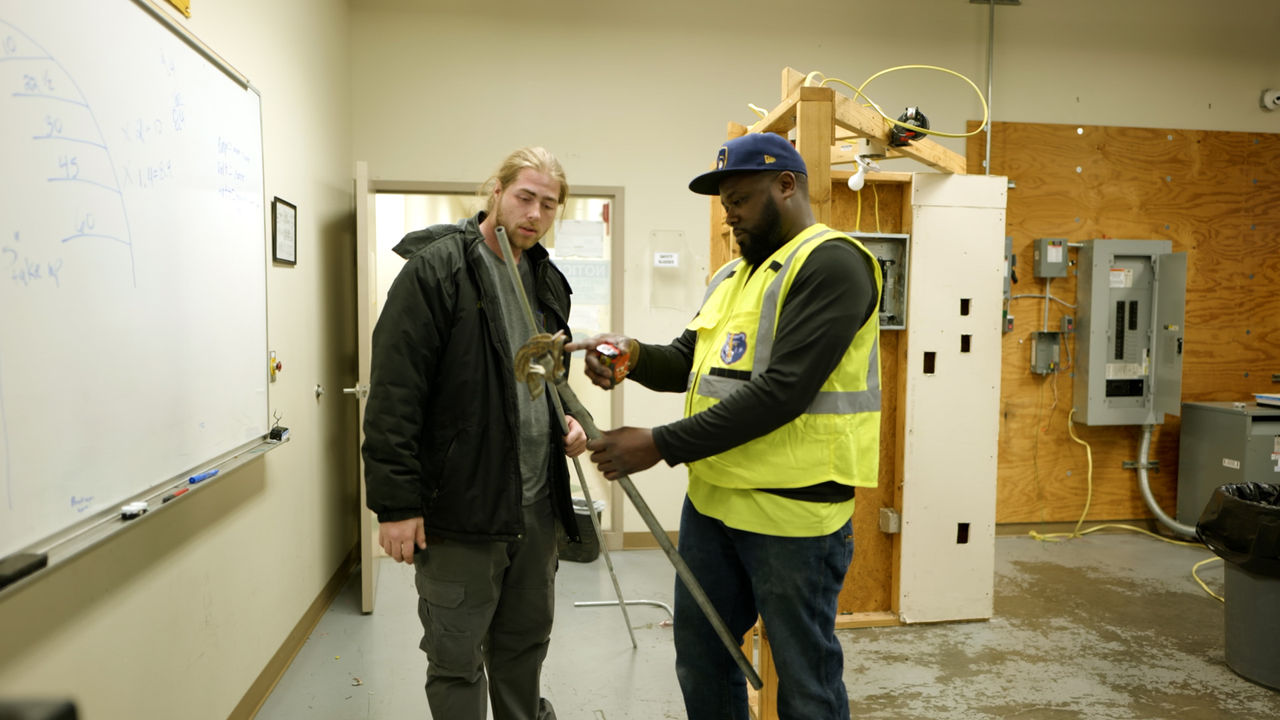
Electricity is essential to modern living, powering homes, businesses, and infrastructure. Electricians, who build and maintain electrical systems, are equally essential. Their skilled work ensures that people can heat and cool their homes, do their jobs, store their food, communicate, and travel.
However, electricians are not just important to individual lives. As of 2026, the federal government has provided $97 billion in funding to upgrade infrastructure and increase manufacturing capacity. Electricians are vital to all these efforts.
With demand for electricians growing, there has never been a better time to get into this trade. How long does it take to become an electrician, and what does it involve? To help launch your career, here is what you need to know and how the Fortis Electrical Trades programs can help.
What Does an Electrician Do?
Electricians install, maintain, and repair electrical systems that power appliances, machinery, lights, and other utilities in people’s homes and businesses, along with many other uses.
Your exact responsibilities as an electrician will depend mostly upon what type of electrician you become. The work of residential electricians, for example, differs from that of commercial or industrial electricians.
However, electricians share many common duties, including the following:
Installing, maintaining, and fixing or replacing electrical systems, including wiring, control, and lighting systems
Analyzing blueprints and technical diagrams
Inspecting electrical components, such as transformers and circuit breakers, and troubleshooting issues
Adhering to state and local building regulations in accordance with the National Electrical Code (NEC)
An electrician’s job description may also depend on their level of seniority. Journey-level electricians, often referred to as journeymen, perform many standard duties associated with electricians. However, if you become a master electrician, you will be able to work on jobs that require more advanced expertise. You may also be in charge of training and supervising journeymen.
Artificial Intelligence: New Skills for Today’s Electricians
While some workers are concerned about the impact of artificial intelligence (AI) on job security, that concern is less common in many skilled trades, including electrical work. Still, AI is influencing how electricians approach their tasks, and some employers may expect familiarity with these tools.
The Independent Electrical Contractors (IEC), a national trade association, shares that electricians use AI to:
Manage projects and create schedules
Process payroll paperwork, create financial forecasts, and carry out other administrative duties
Detect worksite hazards
Create blueprints and plans
Carry out inspections and monitor job progress
Predict when equipment needs to be fixed or replaced
If you work for a company, supervisors or administrative teams may rely on AI tools more heavily in their day-to-day roles. But if you plan to become an independent contractor or run your own business, learning how to use AI can give you an edge — helping you work more efficiently, manage operations more effectively, and stay competitive.
Electrician Career Path: Steps and How Long It Takes
How long it takes to become an electrician will depend entirely on what route you take and what your state’s licensing regulations are. In many cases, it can take anywhere between two and six years. Your specific journey might look a little different, but here are the most common steps involved in the process.
1. Earn a High School Diploma or Equivalent
To enroll in a vocational training program, you will likely need to have at least a high school diploma or an equivalent credential, such as a General Educational Development (GED) diploma.
2. Pursue Vocational Training
Though not always required, completing a vocational training program or enrolling in a trade school is a great way to learn the fundamental electrical skills needed to become an electrician. Through the Fortis Electrical Trades training program in Birmingham, Alabama, you can learn those skills through a combination of classroom and hands-on learning.
Classes in the Fortis Electrical Trades program cover topics such as:
Basic wiring
Cabling
Circuits
Grounding
Transformers
Motor controls and maintenance
Commercial and industrial circuits and controllers
Residential circuitry and design
This program also features classes on the principles of electricity, the mathematics you will use in the field, the NEC, safety, and other essentials that are beneficial to both students with a background in the field and those who are brand new to the electrical trade.
How Long Is an Electrician Training Program?
The length of electrical trade school programs varies. An associate degree-level program generally takes around two years to complete, but trade school and vocational programs are often shorter because they focus on career-ready courses rather than general education courses. For example, the Fortis Electrical Trades diploma program can be completed in as little as 48 instructional weeks, which is about 11 months.
3. Gain Practical Experience Through an Apprenticeship
Once you have learned the fundamentals of electricity, the next step is to complete an apprenticeship. It typically takes four to five years to complete, which translates to approximately 8,000 to 10,000 hours of paid on-the-job training, as well as some technical instruction. Some states require fewer hours, allowing individuals to complete their apprenticeship in only two years.
During your vocational training program, you may be able to begin an apprenticeship while taking classes. Regardless of its length, an apprenticeship allows you to gain invaluable hands-on experience and develop important skills under the tutelage of an experienced electrician. You can find apprenticeships through trade unions, contractor associations, construction companies, and other organizations that employ electricians.
4. Earn Licensure
Most states require electricians to be licensed, though specific requirements vary by state. Earning a license involves passing a test containing questions related to the NEC, as well as state and local electrical codes. You may also need to complete continuing education classes to maintain your license.
Benefits of Becoming an Electrician
Pursuing training and an apprenticeship to become an electrician has numerous advantages. Government and industry forecasts point to a positive employment outlook for electricians in the years ahead. However, the benefits of becoming an electrician extend beyond just landing a job.
Strong Hiring Forecast
The U.S. Bureau of Labor Statistics (BLS) projects that employment of electricians will grow by 9% between 2024 and 2034, with an expected average of about 81,000 job openings each year over that period. The construction of renewable energy plants, factories, neighborhoods, and buildings of all kinds is one of the main drivers behind this fast growth.
Electricians also enjoy a diverse array of job opportunities in the public and private sectors. With your skill set, you could very well find employment just about anywhere.
Opportunity for Advancement
Receiving training, completing an apprenticeship, and earning a license qualify you for entry-level work as a residential, commercial, or industrial electrician — but your prospects do not end there. After gaining some experience, you can pursue the role of master electrician. Master electricians generally have supervisory responsibilities, overseeing journeymen electricians and apprentices, and can take on more complex projects.
How long it takes to become an electrician at this level can vary. Master electricians typically need several years of experience as journeymen electricians, as well as an additional license. While the time investment to become a master electrician is considerable, advancing to this level can be your ticket to taking on more advanced jobs and increasing your earning potential.
Self-Employment Prospects
Another perk of becoming an electrician is the opportunity for self-employment, either as an independent contractor or as the owner of a small business. As a self-employed electrician, you can enjoy greater career freedom and set your own hours, project schedules, and rates. Self-employed electricians may also be able to take advantage of tax write-offs for their business expenses.
Join the Future of Energy Generation as an Electrician
In 2024, the U.S. Energy Information Administration (EIA) reported that Americans set a record for energy consumption. In 2025, they set yet another record, using about 4.43 trillion kilowatt-hours. With energy use at an all-time high, there has never been a better time to become an electrician. Fortis can get you started.
Through the Electrical Trades program offered at the Fortis campus in Birmingham, Alabama, you can learn how to work safely and efficiently in all types of settings. You will also explore concepts such as simple atom and magnetic theory and the process of electrical production, giving you the foundation to keep growing throughout your career.
Fortis also offers an Electrical Systems Technician program at its Lawrenceville and Wayne campuses in New Jersey. This in-demand program is a great option if you want to work with low-voltage systems like the kinds used in telecommunications, security systems, and more.
Request more information and discover how Fortis can prepare you for a skilled trade career today.
Recommended Readings
Commercial Electrician: Job Description, Requirements, and Outlook
Electrical Careers: Commercial, Industrial, and Residential
Industrial Electrician: Job Description, Requirements, and Outlook
Sources:
Indeed, “America Needs Electricians: Addressing the Electrician Labor Shortage”
Indeed, Apprentice vs. Journey-Level Workers: What’s the Difference?
Indeed, How Long Does It Take to Be An Electrician? (With Steps)
Indeed, 10 Pros and Cons of Being an Electrician (With Tips to Become One)
U.S. Bureau of Labor Statistics, Electricians
U.S. Department of Energy, Infrastructure Program and Funding Announcements
U.S. Energy Information Administration, U.S. Electricity Generation in 2025 Hit a Record, Again