Key Takeaways
HVAC training in Alabama can be completed in less time than a traditional college degree. Fortis HVAC programs offer 48 instructional weeks of training to help students prepare for entry-level positions.
Alabama has a growing demand for HVAC technicians. State employment projections estimate 10.2% job growth for heating, air-conditioning, and refrigeration mechanics and installers through 2034.
Grants, work-study, and military benefits can make HVAC training more affordable; some organizations even offer scholarships.
HVAC technicians are the professionals tasked with keeping communities in Birmingham comfortable and safe. The heating, ventilation, air conditioning, and refrigeration (HVAC-R) field offers stability and widespread job opportunities across the region. But can students use financial aid to pay for HVAC school in Birmingham, Alabama?
Yes, eligible students can get financial aid for HVAC school. Grants, scholarships, and other forms of financial aid can make HVAC training in Birmingham more affordable, which can help individuals start their new career on the right foot.
What Does HVAC School in Alabama Entail?
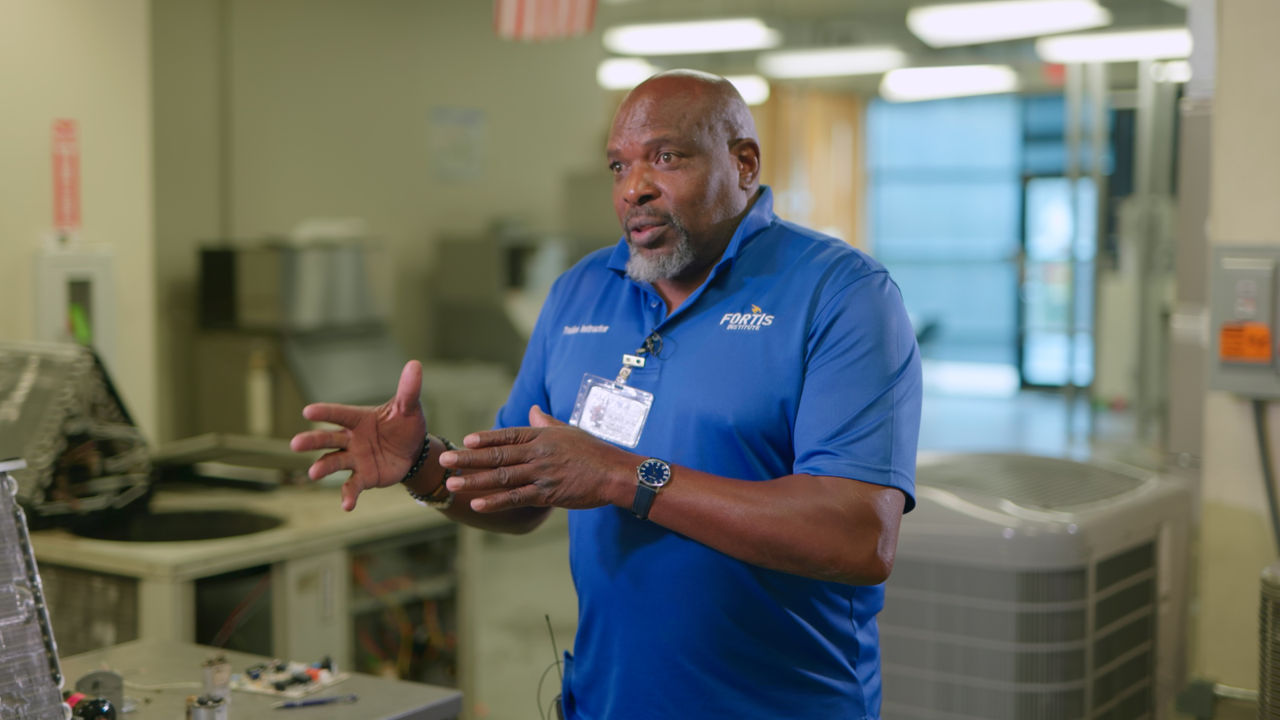
HVAC schools are designed to train aspiring technicians to install and repair heating and cooling systems. Students explore residential, commercial, and industrial HVAC systems while learning how to use testing devices and tools. A combination of classroom instruction and hands-on lab work helps students develop the skills needed to diagnose HVAC problems and implement solutions.
Fortis Institute’s HVAC school in Birmingham, Alabama, offers courses that cover:
Residential air conditioning
Commercial refrigeration concepts
Industrial refrigeration
Commercial air conditioning
Gas heating systems
Electric heat and heat pumps
At Fortis Institute, students gain hands-on training in HVAC system performance and troubleshooting. The program also incorporates preparation for the Environmental Protection Agency (EPA) certification exam. After completing an HVAC school program, which at Fortis can take as little as 48 instructional weeks, graduates can seek entry-level employment opportunities in HVAC companies, with licensed contractors, or at facilities departments in large organizations.
HVAC Financial Aid Options in Alabama
Pursuing a skilled trades career can pay off, and financial aid makes HVAC training more affordable. By lowering the cost of their HVAC training, trades professionals can increase the return on their investment.
Several types of financial aid are available to help students pay for HVAC training programs. Grants and scholarships provide eligible students with money for trade school, making them one of the best options for vocational training.
Financial Aid for HVAC School in Birmingham
Student aid programs cover trade school, vocational training, and accredited career training programs. Birmingham HVAC students may qualify for the following forms of financial aid to pay for school:
Federal Grants: Eligible students enrolled at an approved HVAC school can use federal grants to help cover their education expenses. The Pell Grant supports students who demonstrate financial need. Students with exceptional financial need may also qualify for the Federal Supplemental Educational Opportunity Grant (FSEOG). The Pell Grant awards students up to $7,395 per year, while FSEOG provides up to $4,000 per year.
State Grants: Alabama offers the Alabama Student Assistance Program for eligible state residents attending an Alabama school. This need-based grant provides students with up to $5,000 per year.
HVAC-R Industry Scholarships: Several organizations offer scholarships for HVAC students, including trade associations such as the Air-Conditioning, Heating, and Refrigeration Institute (AHRI). Eligibility requirements, application processes, deadlines, and award amounts vary depending on the scholarship.
Military Education Benefits: Military service members, veterans, and their eligible dependents can use their military education benefits such as the GI Bill or other Department of Veterans Affairs (VA) education benefits to pay for their HVAC training.
Work-Study Programs: The federal work-study program connects eligible students with part-time jobs at their school or in the local area. Participants can use the income from their work-study job to cover their educational expenses.
Federal and private loans are another option to help pay for HVAC school. When possible, students generally prioritize grants, scholarships, and other types of financial aid that do not require repayment before borrowing money for school.
How to Apply for Financial Aid
HVAC students should start the financial aid process by submitting the Free Application for Federal Student Aid (FAFSA) form. This form determines an individual’s eligibility for federal student aid programs, including the Pell Grant.
Other types of need-based financial aid, including state grants, also require the FAFSA. For example, the Alabama Student Assistance Program uses the FAFSA to determine an individual’s financial need.
Students should also research HVAC scholarships, including trade school and vocational scholarships. At Fortis, the Financial Aid Office helps students learn about their financial aid options.
Job Outlook for HVAC Professionals in Birmingham, Alabama
HVAC professionals are in demand in Alabama. Attending an HVAC program can lead to opportunities as an HVAC technician, service technician, or installation technician. The job outlook for these occupations is projected to be strong.
Nationally, HVAC professionals are projected to see 11% job growth from 2025 to 2035 with about 40,600 job openings expected to be available in the field annually, according to the U.S. Bureau of Labor Statistics. Alabama is also projected to see high growth, with the number of HVAC jobs increasing 10.2% between 2024 and 2034, according to the U.S. Department of Labor’s Projections Central.
What is expected to drive this growth? Increasing levels of commercial and residential construction are expected to boost the need for HVAC installers and technicians. HVAC technicians with EPA certification will also help meet the expected demand to upgrade or replace heating and cooling systems in buildings to improve their energy efficiency.
HVAC technicians in Birmingham, Alabama’s third-largest city, work on residential, commercial, and industrial buildings. These skilled professionals maintain vital heating and cooling systems that keep buildings comfortable.
Attend HVAC School in Birmingham, Alabama
. From its campus in Birmingham, Fortis Institute offers a robust HVAC Program designed to help students develop the confidence, knowledge and technical skills they need to work in this always-in-demand field.
The Financial Aid Office at Fortis partners with working adults, career changers, and students with complex financial situations to help them find a way to finance their HVAC training. Contact Fortis to learn more about financial aid for HVAC school, and start a new future today.
Recommended Readings
Are Skilled Trades in Demand?
How to Become an HVAC Contractor
What I Like Best About Working in HVAC