
Key Takeaways
Medical assistant jobs in New Jersey are projected to increase by 17.9% through 2032, according to Projections Central.
Medical assistant training programs feature coursework that covers medical terminology, clinical procedures, and anatomy as well as medical office procedures, billing, and medical coding.
Skills gained in a medical assistant training program include a mix of both hard technical skills and soft interpersonal skills.
In their 2025 allied healthcare workforce industry outlook survey, the National Healthcareer Association (NHA) found that 85% of employers prefer to interview and hire job applicants who have a nationally recognized certificate. When hiring medical assistants, employers often prefer candidates who have graduated from a medical assistant training program, which is an eligibility requirement for some certifications.
Why Pursue Medical Assistant Training?
Pursuing medical assistant training can improve an individual’s career opportunities and prepare them for certification, among many other benefits. Following are four of the most popular reasons why individuals enroll in a medical assistant training program.
1. Develop Medical Assisting Expertise
Medical assistant training programs lay the groundwork for this role’s administrative and clinical aspects. Medical assistants often work as generalists, where they are just as likely to assist with filing insurance claims as to conduct lab screenings. This means students receive a well-rounded, versatile education that prepares graduates for roles as medical assistants.
Medical assistant training programs typically feature coursework that covers medical terminology, clinical procedures, and anatomy as well as medical office procedures, billing, and medical coding. They also teach students about various government regulations, privacy law requirements, patient confidentiality, and the laws and ethics of healthcare.
Becoming a medical assistant can be a rewarding career choice that can provide individuals with both a promising entry-level position and the potential for a meaningful long-term career. Students can complete a medical assistant training program in a year or less. The Medical Assistant Training programs at the Fortis Institute campuses in Wayne and Lawrenceville, New Jersey can be completed in as little as 36 weeks.
2. Prepare for an In-Demand Role
According to Projections Central, the number of positions for medical assistants in New Jersey is expected to increase by 17.9% between 2022 and 2032 — which is more than four times the projected growth rate for the labor market as a whole as reported by the U.S. Bureau of Labor Statistics (BLS).
The BLS suggests the high rate of job growth for medical assistants in the nation will be due to the aging population, which typically has more healthcare needs than younger individuals. The New Jersey Department of Health reports that the percentage of New Jersey residents over the age of 65 grew from 13.5% to 17.7% between 2010 and 2023. Medical assistants in New Jersey are expected to be in demand to support the growing needs for supporting administrative and clinical operations in the state’s healthcare facilities.
3. Gain Hands-On Experience
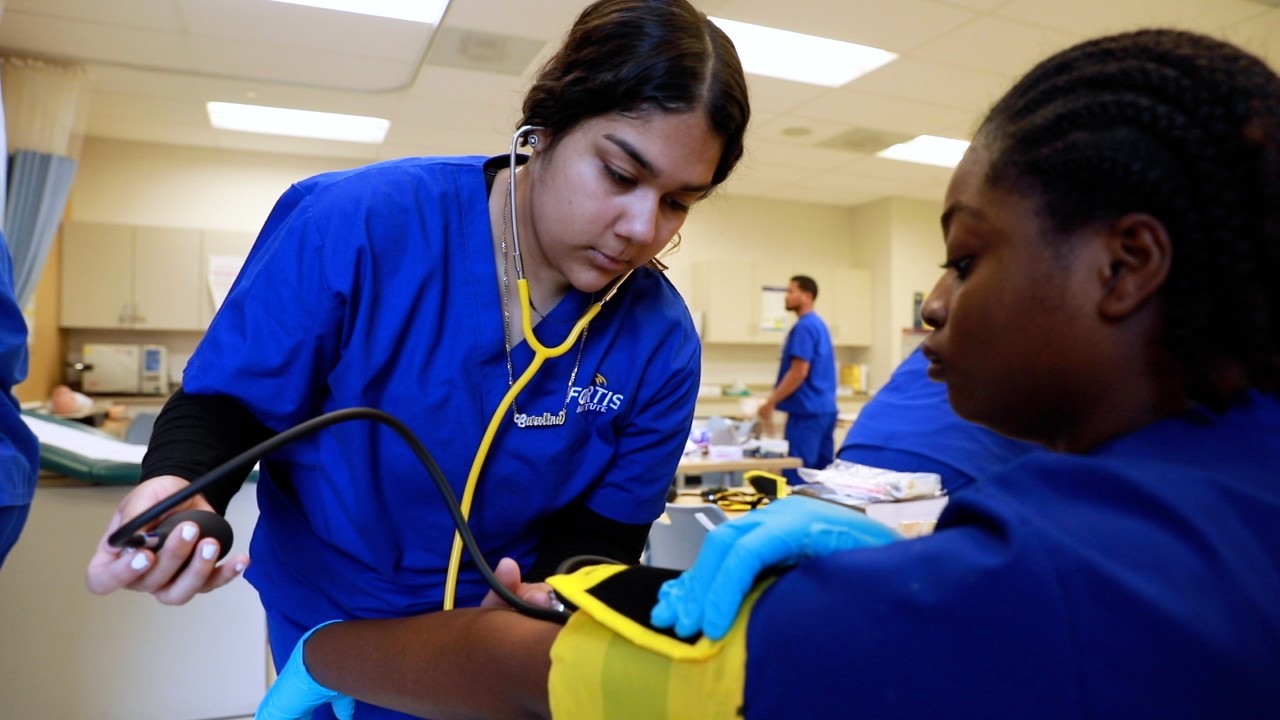
Many medical assistant training programs provide hands-on experience in lab settings, allowing students to practice lab screenings, take vital signs, and assist with simulated electrocardiograms (EKGs). Students also may complete an externship, which allows them to practice their skills in a real-world healthcare setting.
For medical assistants with limited experience, this background can help them stand out to potential employers.
4. Qualify for Certification
Certification is not required to work as a medical assistant in New Jersey, but some employers prefer certified candidates. For example, medical assistants can consider taking the NHA’s Certified Clinical Medical Assistant (CCMA) exam, which covers basic science, clinical care, anatomy, physiology, medical law, and customer service.
To qualify for the CCMA credential, individuals need to have a high school diploma or a certificate of high school equivalency and complete a medical assistant training program or have up to two years of supervised work experience.
What Skills Will You Build Through Medical Assistant Training?
Skills learned in medical assistant training can vary among programs, but they often include hard technical skills and soft interpersonal skills.
Hard skills:
Medical terminology
Anatomy
Physiology
Clinical procedures
Pharmacology
Medical office procedures
Billing and coding
Soft skills:
Empathy
Communication
Organization
Ethics
How to Enroll in Medical Assistant Training in New Jersey
Applying to a medical assistant training program typically involves submitting an online application through the program’s website.
Eligibility requirements to enroll in medical assistant training in New Jersey vary among programs, as the state does not set specific criteria. For example, prospective students who apply to the Medical Assistant Training program at the Fortis campuses in New Jersey need a high school diploma or the equivalent and achieve a minimum score on the Wonderlic Scholastic Level Exam (SLE).
To be accepted, students also need to conduct an interview with Fortis admissions staff.
Begin Your Career as a Medical Assistant
Completing medical assistant training in New Jersey is required by many employers, whether to meet their educational standards or to obtain a certification. For prospective medical assistants ready to take the next step in their career, the Fortis Medical Assistant Training program offered at our Lawrenceville and Wayne, New Jersey, campuses provides a comprehensive foundation and can be completed within a relatively short time frame.
Our flexible Medical Assistant Training program includes a combination of in-person and online classes, featuring courses in subjects such as clinical procedures and techniques, medical records and insurance, and medical anatomy and physiology.
The program also offers career development services such as interview preparation and resume assistance, to help graduates get their first entry-level medical assistant position. Lasting just 36 weeks, the program is designed to help students jump-start their career.
Find out how you can make a difference as a medical assistant with Fortis.
Recommended Readings
Is Healthcare a Good Career Path?
Medical Assistant vs. Pharmacy Tech
Best Places to Work as a Medical Assistant