
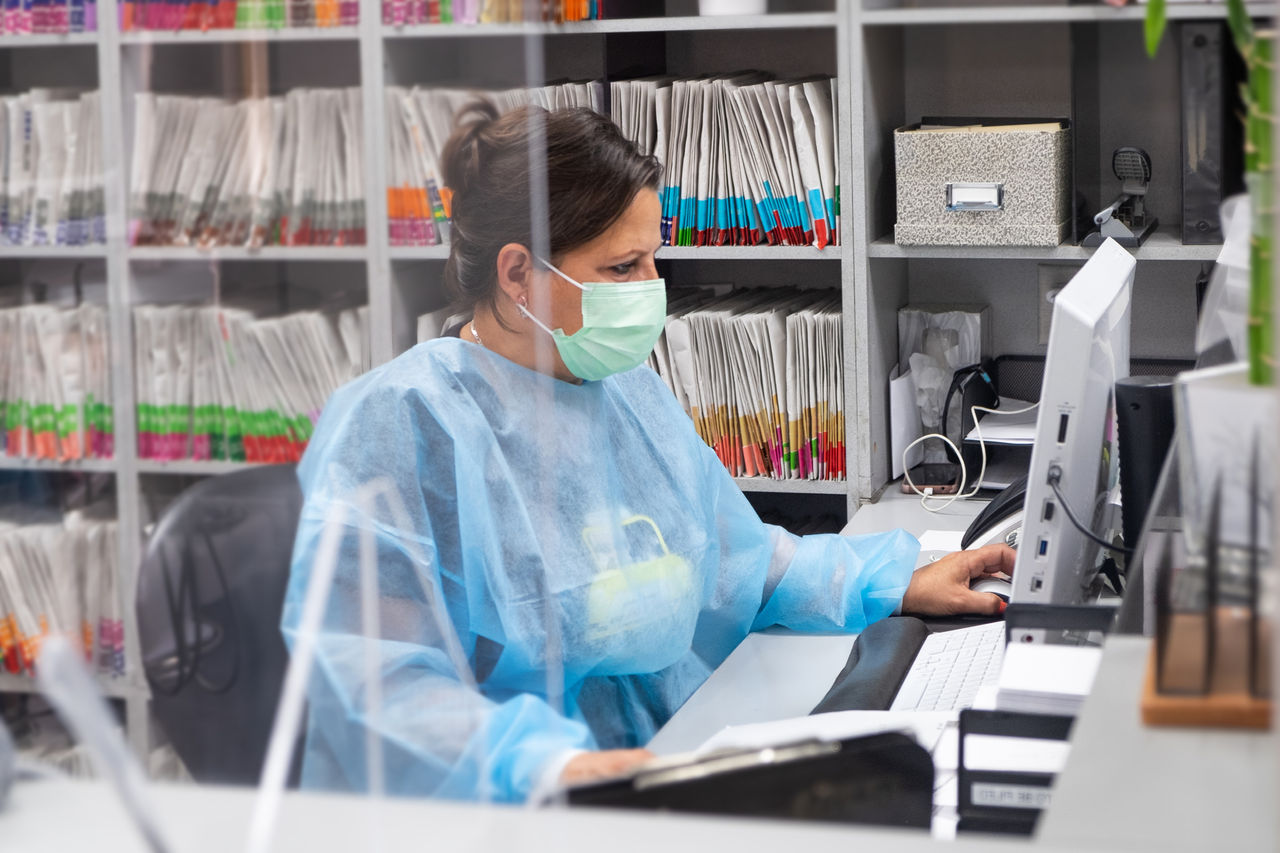
The healthcare field is growing fast—thanks to new technologies, evolving procedures, and AI. But here’s the good news: you don’t have to work directly with patients to build a meaningful career in healthcare. If hands-on patient care isn’t your thing, there are plenty of behind-the-scenes medical roles that play a critical part in keeping the system running smoothly.
If you’re thinking about a medical career but want to avoid extensive patient interaction, here are five jobs you may want to consider:
Medical Billing and Coding
A medical and billing coder Medical billing and coding professionals process patient data including medical records and related insurance. They code a patient's diagnosis and then request payment from the patient's insurance company. This critical role ensures that healthcare providers are quickly and accurately paid for the treatment they provide to their patients.Medical Office Administration
An entry-level position as a medical office admin could involve a variety of tasks, such as bookkeeping, billing, patient data collection and management, transcription, word processing, and appointment scheduling. While you may have some patient interaction, such as scheduling appointments, you won’t be responsible for providing direct care.Medical Lab Technician
A medical lab tech uses equipment like microscopes, cell counters, and computers to perform tests and laboratory procedures. The information they collect helps diagnose diseases and leads to determining the proper treatment. A lab technician will analyze body fluids, cells and tissues. While they will be in contact with a patient’s test samples, they usually won’t have direct contact with the patient themself.Lab Technician
A lab technician works in the field of biotechnology, which is a major field with extensive applications in medicine as well as agriculture, industry, and the environment. Lab technicians perform vital duties in the healthcare and scientific community by collecting and analyzing blood or tissue samples to perform diagnostic tests usually under the supervision of a physician or technologist. They often record data, protect the accuracy and efficiency of scientific experiments, maintain equipment and lab tools, and keep the lab organized and sanitary.Sterile Processing Technician
A sterile processing technician is another behind-the-scenes role within the medical field. This person is responsible for cleaning and sterilizing medical instruments as well as safely transferring and storing them. Before a procedure, they test and monitor instruments and tools to make sure they work properly. They are also responsible for maintaining a hospital’s inventory of all sterile items, including surgical gowns, masks and gloves.
If any of these roles in the medical field sound interesting to you, Fortis offers programs that can help you get on the path to a new career. Submit the “Request Information” form on this page and our career advisor will reach out to discuss opportunities with you.