
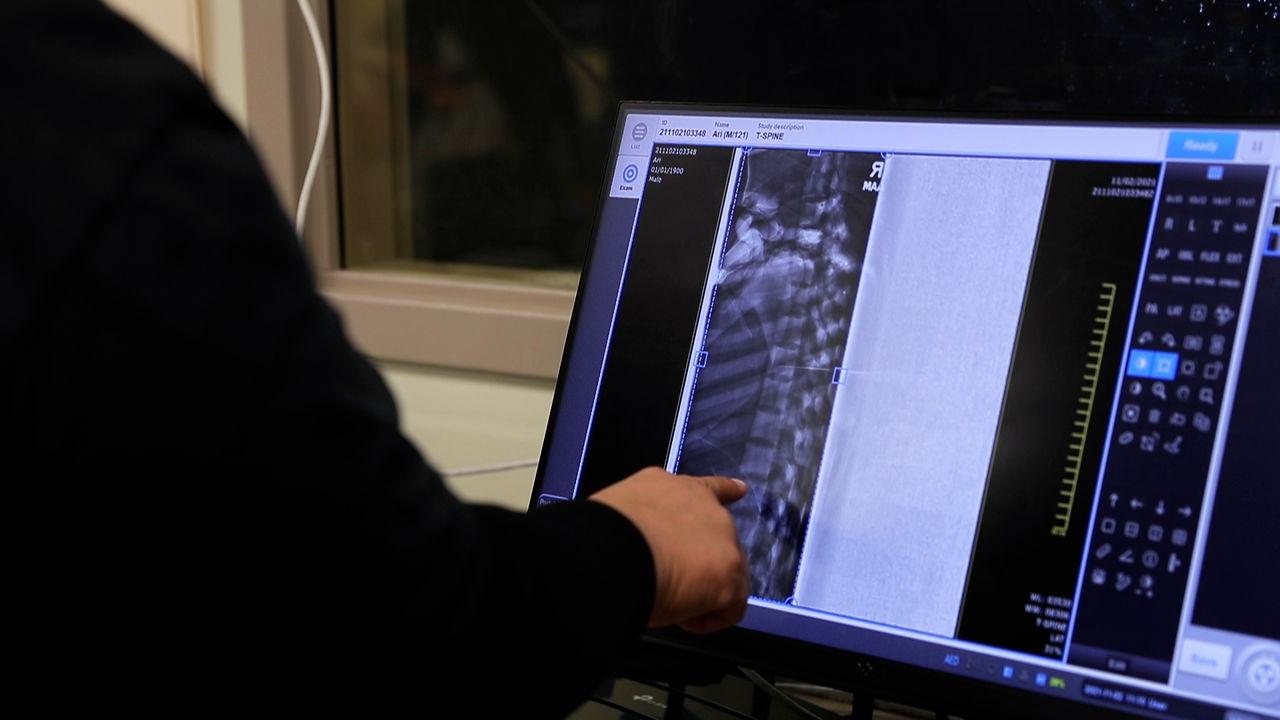
With an aging population and the rise of chronic disease, the U.S. Bureau of Labor Statistics (BLS) projects that positions for radiologic technologists will increase by 5% from 2024 to 2034, almost double the growth rate of the overall labor market. These days, being a radiologic technologist means understanding how artificial intelligence (AI) is applied in clinical settings.
Imaging is often one of the first tools a doctor uses to assess a patient’s health. Radiologic technologists use digital radiography; CT scanners; mobile X-ray units; and increasingly, AI in radiology to help physicians see inside the body without surgery or guesswork.
A radiologic technologist training program can help you develop the skills to pursue a rewarding career in the sector. Before we break down what radiologic technologists need to know, including key skills, let us first highlight the benefits of AI in radiology.
Can AI Benefit Radiology and Radiologic Technology?
The Radiological Society of North America (RSNA) reports that the U.S. Food and Drug Administration (FDA) has cleared more than 770 AI medical devices that focus on radiology as of 2025. This trend offers evidence that healthcare organizations are seeing benefits of AI in radiology.
Early Detection
AI in radiology can detect changes in the body, such as lesions or tumors in the brain, lungs, or heart, that a human might miss. It can also help track tumor growth or brain shrinkage across multiple imaging sessions, standardizing how findings get presented and reported. Doctors can make clinical decisions sooner and improve patient outcomes.
Speedier Examinations
AI can speed up the scanning process, helping patients who may experience anxiety during the procedure. About 28% of patients reported nervousness during MRI exams, according to a 2025 European Journal of Radiology study. Faster exams can also help care teams assess more patients.
Improved Predictions
Algorithms can forecast breast cancer years before it appears and assess pancreatic cancer risk from electronic health records (EHRs) alone. Generative AI is being explored to automate routine reporting, including drafting findings from chest X-rays, so radiologists can spend more time on complex cases.
Patient Engagement
AI allows patients to engage with their own health information, using AI tools to analyze their health records. This can be useful, but it has limits. The American Medical Association (AMA) reports that nearly half of physicians advise against patients using AI to interpret radiology results. Clinical judgment should be reserved for medical professionals.
What Are Examples of AI in Radiology?
According to the American College of Radiology (ACR), 30% of radiologists use AI in clinical practice. However, adoption without oversight creates its own risks. AI tools need to be vetted for safety and effectiveness before they are used clinically. Healthcare professionals, including radiologic technologists, can participate in those evaluation processes.
Below are examples of AI in radiology.
Prioritizing Care
AI can flag urgent findings on imaging exams and prioritize those cases in a radiologist’s worklist. By prioritizing critical cases, doctors can establish treatment plans more quickly. In scenarios such as stroke care, every minute affects outcomes. The speed at which care is prioritized can be the difference between recovery and lasting disability.
Reporting
Radiology reporting processes can be time consuming, and findings can vary significantly from one provider to the next. Natural language processing and generative AI tools can transcribe speech, auto-compile reports, and structure findings for clarity, helping clinicians with decision-making and reducing friction in lengthy, often frustrating reporting processes.
Cardiac Imaging
Nearly half of all U.S. adults — 130.6 million people — have some form of cardiovascular disease, according to the American Heart Association (AHA). AI systems can aid in diagnoses by colorizing heart chambers on grayscale echocardiography images in real time, improving visualization of cardiac structures and speeding up interpretation.
Detecting Cancer
Combined with a radiologist’s clinical reasoning, AI’s pattern recognition capabilities can help identify diseases at earlier stages and improve diagnostic accuracy. It can measure tumor size; assist with biopsy planning; and track cancer response to treatment across breast, lung, prostate, and brain cancers. A study in the European Journal of Radiology found that AI correctly identified 27.5% of false negatives and 12.2% of minimal-sign cancers in screening mammograms.
Diagnosing Alzheimer’s Disease
Nearly 4 in 5 Americans say they would want to know if they had Alzheimer’s before symptoms appear, according to the Alzheimer’s Association. AI is helping make this possible. AI tools can quantify brain changes, such as atrophy or abnormal protein buildup, supporting more confident diagnoses and helping clinicians track how patients respond to treatment over time.
5 AI Skills for Radiologic Technologists
Radiologic technologists perform diagnostic imaging exams including X-rays, CT scans, MRIs, and bone density scans. Some may specialize in mammography or urethrography. The field is evolving quickly and AI competencies are becoming increasingly important. However, human skills still matter.
1. Anatomy and Image Analysis
Radiologic technologists need to know what they are looking at. A solid grasp of anatomy and radiological concepts is essential for producing diagnostic images and assessing scan results. Knowledge of anatomy is also essential for positioning patients correctly, so images are clear enough for accurate diagnoses.
2. Communication
Radiologic technologists explain procedures to patients, keep the radiology department informed about how new tools affect daily workflows, and maintain accurate records throughout. Communication skills are essential for coordinating with care teams and patients, documenting findings, and keeping the human element in radiology.
3. Technical Proficiency
Radiologic technologists should be comfortable with a range of technologies, including imaging equipment, radiology-specific software such as a picture archiving and communication system (PACS), and electronic systems for updating patient records. They also calibrate and maintain equipment, adjust radiation exposure times and intensity, and troubleshoot mechanical issues.
4. Safety Awareness
Radiation exposure is a real concern for radiologic technologists over the course of their careers. They must know how to protect themselves, patients, and staff from unnecessary radiation exposure. Understanding and applying radiology-specific safety protocols helps mitigate these risks.
5. Empathy
Every patient encounter is different. Some patients arrive anxious, while others are in pain or unfamiliar with what to expect. Showing empathy in your interactions puts people at ease and often leads to better imaging outcomes because calm, attentive patients produce cleaner scans.
Prepare for a Radiologic Technologist Career at Fortis
If you are ready to develop the skills needed in today’s imaging environments, consider the Fortis Radiologic Technology program. Offered in seven locations — two in Tennessee and the rest in Georgia, Ohio, Louisiana, Maryland, and Texas — our curriculum covers radiation safety, image analysis, and patient care, combining foundational courses with hands-on experience and real-world skills.
Discover how Fortis can help you launch a career as a radiologic technologist.
Recommended Readings
Radiologic Technologist vs. Radiologic Technician
How Long Does It Take to Train to Become a Radiologic Technologist?
Essential Radiologic Technologist Skills