
3 Key Takeaways:
- A critical role supporting patient care without direct patient contact: Biomedical Equipment Technicians (BMETs) keep essential medical devices running and technology humming behind the scenes.
- Multiple career paths: An associate degree can lead to roles like BMET, medical equipment repairer, field service technician, and more.
- A strong option for career changers: Ideal if you want to work with your hands, troubleshoot problems, and build strong technical skills.
Does This Sound Like You?
- You’d rather work with your hands than sit behind a desk
- You enjoy troubleshooting and figuring out how things work
- You’d thrive in a career where technology and practical skills intersect
- You’ve got the technical mindset and want to use it to keep life-saving equipment and software systems running—supporting a critical mission that matters
If that sounds familiar, a career as a Biomedical Equipment Technician (BMET), or frequently referred to as a Medical Equipment Repairer, may be a good fit! Let’s explore:
What Is a Biomedical Equipment Technician?
In short, a Biomedical Equipment Technician supports patient care—behind the scenes.
Not all healthcare careers happen at the bedside. Behind every medical device and software system is someone making sure it works safely and correctly.
Biomedical Equipment Technicians are the professionals responsible for maintaining and repairing the equipment and systems that healthcare teams rely on every day. It’s a role that combines technical skill with real-world impact—supporting patient care from behind the scenes.
Frequently Asked Questions
What does a BMET do?
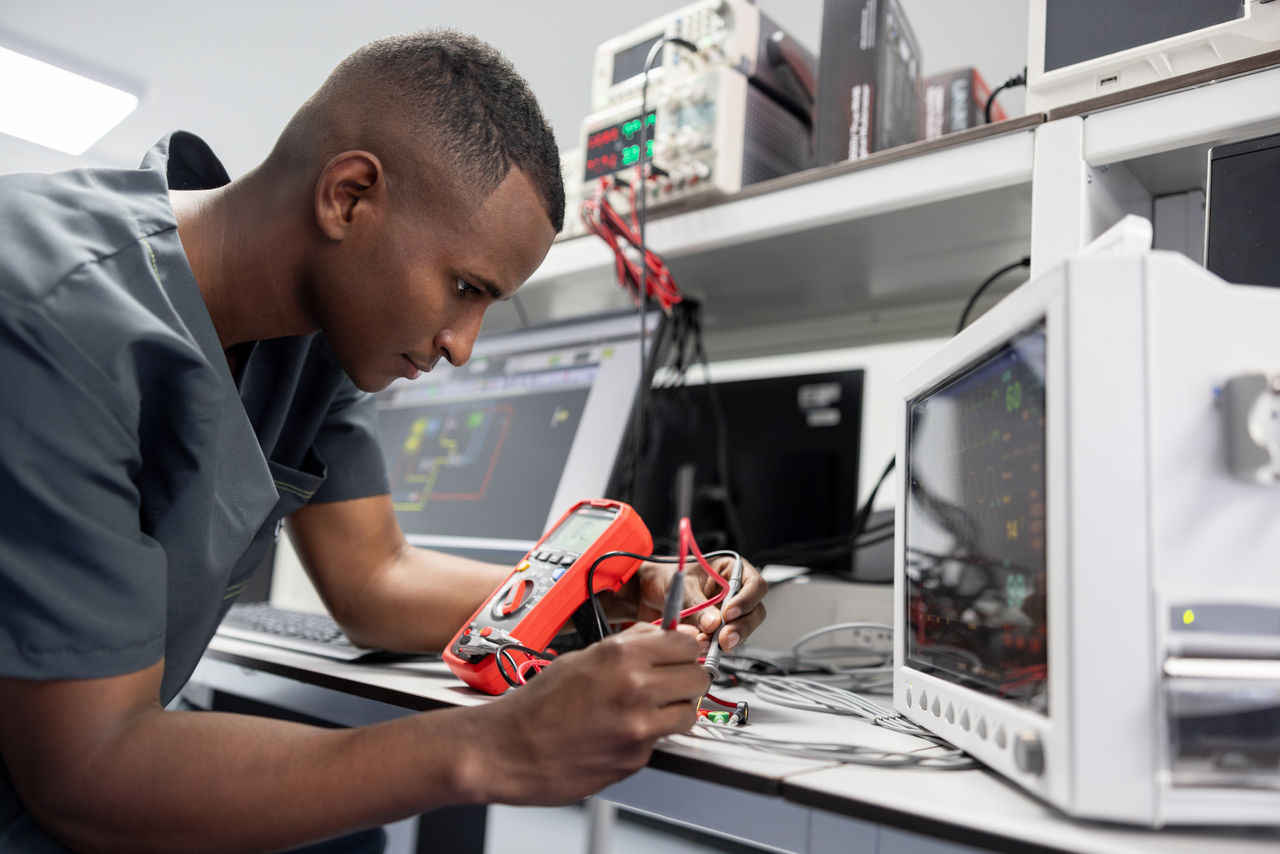
If you’re wondering what day-to-day work looks like, BMETs are hands-on with healthcare technology. You’re the person helping ensure critical medical equipment works when it matters most. Common responsibilities include:
- Inspecting and testing medical equipment
- Diagnosing and repairing device issues
- Performing routine maintenance
- Installing and calibrating new equipment
- Documenting work to meet safety and compliance standards
What Jobs Can This Training Lead To?
With an Associate Degree in Biomedical Equipment Technology, you may pursue roles such as:
- Biomedical Equipment Technician (BMET)
- Medical Equipment Repairer
- Healthcare Technology Management (HTM) Technician
- Field Service Technician
- Clinical Engineering Technician
Where does a BMET work?
Biomedical Equipment Technicians work in hospitals, clinics and healthcare facilities.
Is Biomedical Equipment Technology a Good Career for Me?
If you see yourself thriving in a hands-on environment where technology meets practical skills—and you like the idea of supporting patients and healthcare professionals without direct patient interaction—this career could be a strong fit for you.
Want to Continue Exploring This Career Opportunity?
At Fortis, the Biomedical Equipment Technology program is designed to prepare students for entry-level roles through hands-on training. You’ll build practical, real-world skills and the confidence to pursue opportunities in this growing, purpose-driven field.